

In the industrial sector, compressed air is a vital utility used in a wide range of applications, from manufacturing processes to powering pneumatic tools. However, compressed air often contains contaminants such as oil, water, and dust, which can have detrimental effects on equipment and processes. This raises an important question: Can an air dryer machine remove oil from compressed air? In this blog post, we will explore the capabilities of air dryer machines in removing oil from compressed air and discuss the importance of this process for industrial operations.
The Nature of Oil in Compressed Air
Oil can enter the compressed air system in several ways. One common source is the lubricating oil used in air compressors. As the compressor operates, some of the oil can be carried over into the compressed air stream. Additionally, oil can also be introduced from the environment, such as when the compressed air is drawn in from an area with high levels of airborne oil particles.
The presence of oil in compressed air can cause a variety of problems. It can contaminate products in manufacturing processes, leading to quality issues and increased waste. Oil can also cause damage to pneumatic tools and equipment, reducing their efficiency and lifespan. In some cases, oil in compressed air can even pose a safety hazard, such as when it comes into contact with electrical components or ignitable materials.
How Air Dryer Machines Work
Air dryer machines are designed to remove moisture from compressed air, but many models also have the ability to remove oil and other contaminants. There are several types of air dryer machines available, each with its own unique operating principle.
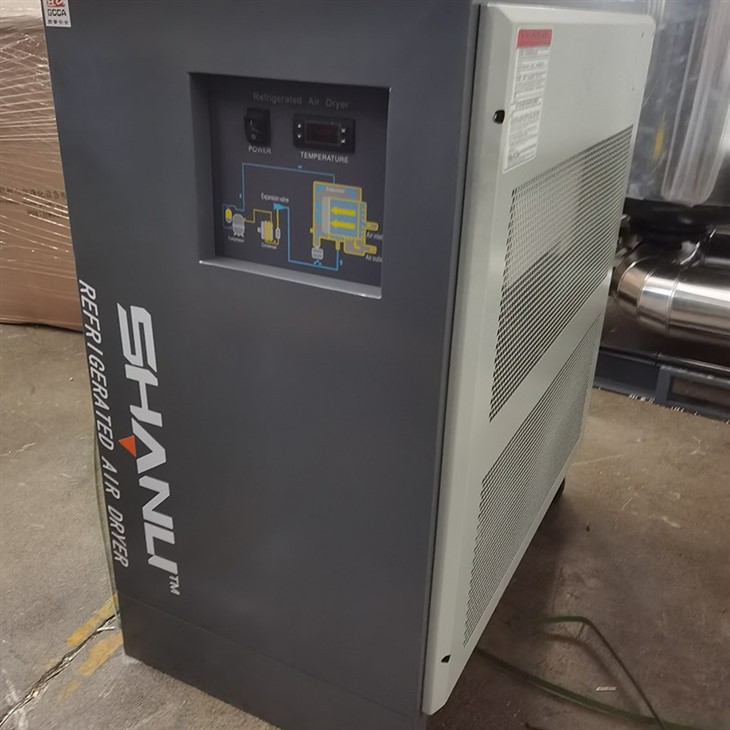
Refrigerated Air Dryers: These are the most common type of air dryer machines. They work by cooling the compressed air to a temperature where the moisture condenses into liquid form. The condensed water is then removed from the system through a separator. Some refrigerated air dryers also have additional filtration stages to remove oil and other contaminants. For example, the Industral Refrigerated Compressed Air Dryer is equipped with advanced filtration technology to effectively remove oil from compressed air.
Desiccant Air Dryers: These dryers use a desiccant material, such as silica gel or activated alumina, to adsorb moisture from the compressed air. Desiccant air dryers can achieve very low dew points, making them suitable for applications where extremely dry air is required. Some desiccant air dryers also have oil removal capabilities, either through the use of special desiccant materials or additional filtration stages.
Membrane Air Dryers: These dryers use a semi-permeable membrane to separate moisture from the compressed air. The membrane allows water vapor to pass through while blocking the passage of air molecules. Membrane air dryers are typically used for small-scale applications where a low flow rate of dry air is required. While they are not as effective at removing oil as refrigerated or desiccant air dryers, some membrane air dryers can be equipped with additional filtration to improve oil removal performance.

Oil Removal Mechanisms in Air Dryer Machines
There are several mechanisms by which air dryer machines can remove oil from compressed air:
Filtration: Many air dryer machines are equipped with filters that are designed to trap oil droplets and other contaminants. These filters can be made of various materials, such as fiberglass, activated carbon, or stainless steel mesh. The filters work by capturing the oil droplets as the compressed air passes through them. The size of the filter pores determines the efficiency of oil removal. Smaller pores can capture smaller oil droplets, but they also increase the pressure drop across the filter, which can reduce the flow rate of the compressed air.
Coalescence: Coalescing filters are a type of filter that is specifically designed to remove oil from compressed air. These filters work by causing the oil droplets to combine or coalesce into larger droplets. The larger droplets are then easier to separate from the compressed air using a separator. Coalescing filters are very effective at removing oil, but they require regular maintenance to ensure optimal performance.
Adsorption: Some air dryer machines use adsorbent materials, such as activated carbon, to remove oil from compressed air. Adsorbent materials have a large surface area that can attract and hold oil molecules. The oil molecules are adsorbed onto the surface of the adsorbent material, effectively removing them from the compressed air. Adsorption is a very effective method of oil removal, but the adsorbent material needs to be replaced periodically to maintain its effectiveness.
Factors Affecting Oil Removal Efficiency
The efficiency of oil removal by an air dryer machine can be affected by several factors:
Oil Concentration: The higher the concentration of oil in the compressed air, the more difficult it is to remove. Air dryer machines may need to be operated at a higher capacity or with more advanced filtration systems to effectively remove high levels of oil.
Compressed Air Flow Rate: The flow rate of the compressed air can also affect oil removal efficiency. If the flow rate is too high, the oil droplets may not have enough time to be captured by the filters or coalesce into larger droplets. On the other hand, if the flow rate is too low, the air dryer machine may not be operating at its optimal efficiency.
Temperature and Pressure: The temperature and pressure of the compressed air can also have an impact on oil removal efficiency. Higher temperatures can cause the oil to vaporize, making it more difficult to remove. Additionally, changes in pressure can affect the performance of the filters and other components of the air dryer machine.
Maintenance and Service: Regular maintenance and service of the air dryer machine are essential to ensure optimal oil removal efficiency. This includes replacing filters, changing desiccant materials, and cleaning the separator. Failure to perform regular maintenance can lead to a decrease in oil removal efficiency and an increase in the risk of equipment damage.
Importance of Oil Removal in Industrial Operations
The removal of oil from compressed air is crucial for many industrial operations. Here are some of the key reasons why:
Product Quality: In manufacturing processes, the presence of oil in compressed air can contaminate products, leading to quality issues and increased waste. By removing oil from the compressed air, manufacturers can ensure that their products meet the required quality standards.
Equipment Performance and Lifespan: Oil in compressed air can cause damage to pneumatic tools and equipment, reducing their efficiency and lifespan. By removing oil from the compressed air, industrial operators can extend the life of their equipment and reduce maintenance costs.
Safety: In some industrial applications, oil in compressed air can pose a safety hazard. For example, oil can accumulate on electrical components, increasing the risk of electrical fires. By removing oil from the compressed air, industrial operators can improve the safety of their workplace.
Environmental Compliance: In many industries, there are strict environmental regulations regarding the discharge of oil and other contaminants. By removing oil from the compressed air, industrial operators can ensure that they are in compliance with these regulations.
Conclusion
In conclusion, an air dryer machine can indeed remove oil from compressed air, but the effectiveness of oil removal depends on several factors, including the type of air dryer machine, the oil removal mechanisms employed, and the operating conditions. By choosing the right air dryer machine and ensuring proper maintenance and service, industrial operators can effectively remove oil from compressed air and enjoy the many benefits that come with clean, dry compressed air.
If you are looking for an air dryer machine that can effectively remove oil from compressed air, we invite you to contact us for more information. Our team of experts can help you select the right air dryer machine for your specific application and provide you with professional advice and support. We look forward to working with you to meet your compressed air needs.
References
- ASHRAE Handbook - Refrigeration. American Society of Heating, Refrigerating and Air-Conditioning Engineers.
- Compressed Air and Gas Handbook. Ingersoll Rand.
- Pneumatic Systems Design and Application. Norgren.
