

Hey there! As a supplier of water cooled air coolers, I often get asked about how the evaporation process works in these nifty machines. So, I thought I'd take a few minutes to break it down for you in a way that's easy to understand.
Let's start with the basics. Evaporation is a natural process where a liquid, in this case, water, changes into a vapor. You've probably seen this happen when you leave a glass of water out in the sun, and after a while, the water level goes down. That's evaporation at work.
In a water cooled air cooler, this evaporation process is harnessed to cool the air. The cooler consists of a water tank, a pump, cooling pads, and a fan. When you turn on the cooler, the pump starts to circulate water from the tank to the cooling pads. These pads are usually made of a porous material that can hold a large amount of water.
Once the cooling pads are saturated with water, the fan kicks in. The fan draws warm air from the surrounding environment through the wet cooling pads. As the warm air passes through the pads, the water on the pads evaporates. And here's the key part: evaporation is a cooling process. When water changes from a liquid to a vapor, it absorbs heat from its surroundings. In this case, the heat is taken from the warm air passing through the pads.
As a result, the air that comes out of the cooler is significantly cooler than the air that went in. This cooled air is then blown into the room, helping to lower the overall temperature. It's a simple yet effective way to cool a space without using a lot of energy, which is one of the main advantages of water cooled air coolers.
Now, let's talk about the efficiency of this process. The efficiency of a water cooled air cooler depends on several factors. One of the most important factors is the humidity of the air. Evaporation works best in dry air because there's more capacity for the air to absorb water vapor. In areas with high humidity, the air is already saturated with water vapor, so the evaporation process slows down, and the cooler may not be as effective.
Another factor is the quality of the cooling pads. High - quality cooling pads have a larger surface area, which allows for more water to be exposed to the air and more evaporation to occur. At our company, we offer a High Efficiency Air Cooler that uses top - notch cooling pads to maximize the evaporation process and provide better cooling performance.
The size of the water tank also matters. A larger water tank means that the cooler can run for a longer time without needing to be refilled. This is especially useful if you're using the cooler in a large room or for an extended period.
Let's dig a bit deeper into the science behind evaporation in water cooled air coolers. The heat of vaporization is the amount of heat energy required to change a liquid into a vapor at a constant temperature. For water, the heat of vaporization is relatively high. This means that a significant amount of heat can be removed from the air during the evaporation process.
The rate of evaporation is also affected by the temperature of the air and the water. Warmer air can hold more water vapor, so evaporation is faster when the air is warm. Similarly, warmer water evaporates more quickly than colder water. However, most water cooled air coolers are designed to work efficiently at normal room temperatures.
There are different types of water cooled air coolers available in the market. One popular type is the Water Evaporative Cooler. These coolers are simple in design and are great for small to medium - sized rooms. They work on the principle of evaporation to cool the air effectively.
If you're looking for something more powerful and efficient, our Water Cooled High Efficiency Air Cooler might be the perfect choice. It's designed with advanced technology to provide maximum cooling while using minimal energy.

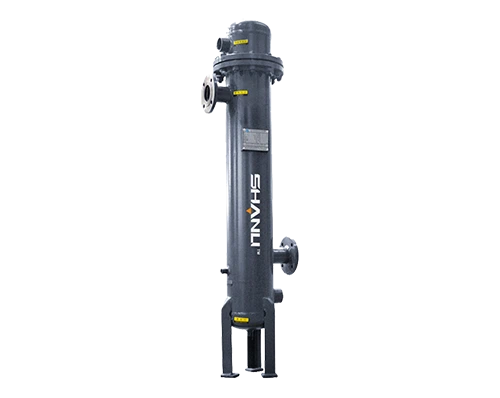
Maintaining a water cooled air cooler is also relatively easy. You need to regularly clean the water tank to prevent the growth of bacteria and algae. You should also replace the cooling pads every once in a while to ensure optimal performance.
In conclusion, the evaporation process in a water cooled air cooler is a natural and energy - efficient way to cool the air. By understanding how it works, you can make an informed decision when choosing a cooler for your home or office.
If you're interested in purchasing a water cooled air cooler or have any questions about our products, don't hesitate to reach out. We're always here to help you find the best solution for your cooling needs. Whether you need a small cooler for your bedroom or a large one for a commercial space, we've got you covered. So, why wait? Contact us today to start the procurement process and experience the coolness of our water cooled air coolers.
References
- Principles of Heat and Mass Transfer, by Frank Kreith and Mark Bohn
- Handbook of Air Conditioning and Refrigeration, by William D. Arora
