

Hey there! As a supplier of Modular Desiccant Air Dryers, I've been getting a lot of questions lately about how to control the operation of these nifty machines. So, I thought I'd put together this blog post to share some options with you.
First off, let's quickly talk about what a modular desiccant air dryer does. Essentially, it removes moisture from compressed air, which is super important in many industrial applications. Moisture in compressed air can cause all sorts of problems, like corrosion in pipes, damage to pneumatic tools, and even affect the quality of the end product in manufacturing processes.
Now, onto the control options.
Timer - Based Control
One of the most common ways to control a modular desiccant air dryer is through timer - based control. This is a pretty straightforward method. You set a fixed time for the drying and regeneration cycles of the dryer.
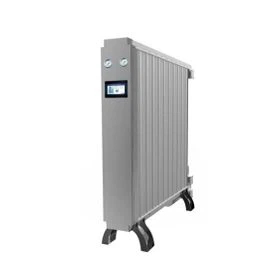
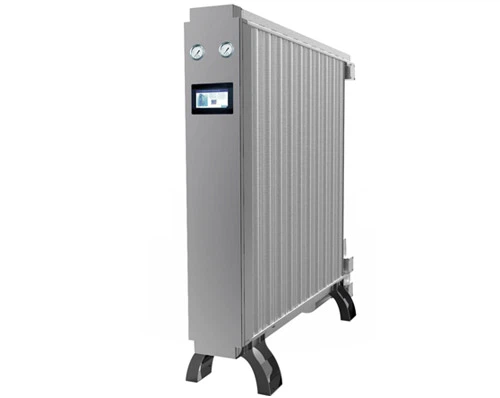
For example, you might set the drying cycle to run for 10 minutes and the regeneration cycle to run for 5 minutes. The dryer will then switch between these two cycles based on the pre - set times. This type of control is easy to understand and implement. It's great for applications where the air demand is relatively constant.
However, it does have its drawbacks. If the air demand changes, say it increases suddenly, the fixed timer settings might not be sufficient. The dryer might not be able to regenerate the desiccant properly, leading to reduced drying efficiency. And if the air demand decreases, the dryer might be wasting energy by running the regeneration cycle too often.
Dew Point - Based Control
Dew point - based control is a more advanced option. Instead of relying on fixed times, this method uses a dew point sensor to measure the moisture content in the compressed air.
When the dew point reaches a certain pre - set level, the dryer will start the regeneration cycle. This ensures that the dryer only regenerates when it actually needs to, which can save a significant amount of energy.
Let's say you have an application where the air demand varies throughout the day. With dew point - based control, the dryer can adjust its operation accordingly. If the air is very dry, the regeneration cycle will be less frequent. But if the air becomes more humid, the dryer will kick into regeneration mode to maintain the desired dew point.
This type of control is more expensive upfront because you need to install a dew point sensor. But in the long run, it can pay off in terms of energy savings and better overall performance. You can check out our Modular Heatless Desiccant Dryer which can be configured with dew point - based control for optimal operation.
Pressure - Based Control
Pressure - based control is another option that can be used, especially in systems where the air pressure is a key factor. In this method, the dryer's operation is controlled based on the pressure of the compressed air.
When the air pressure drops below a certain level, it might indicate that the desiccant is saturated and needs to be regenerated. So, the dryer will start the regeneration cycle. Conversely, when the pressure is within the normal range, the dryer will continue with the drying cycle.
This type of control is useful in applications where the air pressure is closely related to the moisture content. For example, in some pneumatic systems, a drop in pressure can be a sign of increased moisture in the air. Our Heatless Regeneration Modular Adsorption Dryer can be equipped with pressure - based control for such applications.
PLC - Based Control
PLC (Programmable Logic Controller) - based control offers the highest level of flexibility. A PLC is a computer - based controller that can be programmed to control the dryer's operation based on a variety of parameters.
You can program the PLC to take into account factors like air demand, dew point, pressure, and even external conditions like temperature and humidity. This allows for a highly customized control strategy.
For instance, you can program the PLC to adjust the drying and regeneration cycles based on the time of day. During peak production hours, the dryer can operate more aggressively to meet the higher air demand. And during off - peak hours, it can reduce its energy consumption.
However, PLC - based control requires a certain level of technical expertise to program and maintain. But if you have a complex industrial application with variable air demand and specific performance requirements, it's definitely worth considering. You can find more information about our Industrial Desiccant Air Dryer, which can be integrated with a PLC for precise control.
Comparison of Control Options
Let's take a quick look at how these control options stack up against each other:
| Control Option | Advantages | Disadvantages |
|---|---|---|
| Timer - Based Control | Easy to understand and implement, low cost | Not suitable for variable air demand, may waste energy |
| Dew Point - Based Control | Energy - efficient, regenerates only when needed | Higher upfront cost, requires sensor maintenance |
| Pressure - Based Control | Useful in pressure - sensitive applications | May not be sufficient for all types of air demand variations |
| PLC - Based Control | Highly customizable, can adapt to complex conditions | Requires technical expertise, higher implementation cost |
Conclusion
So, there you have it - the main options for controlling the operation of a modular desiccant air dryer. Each option has its own pros and cons, and the best choice depends on your specific application and requirements.
If you're still not sure which control option is right for you, don't hesitate to reach out. We're here to help you make the best decision for your business. Whether you need a simple timer - based control for a small - scale application or a complex PLC - based system for a large industrial plant, we've got you covered.
We have a wide range of modular desiccant air dryers that can be configured with different control options. So, if you're in the market for a new dryer or looking to upgrade your existing one, get in touch with us for a consultation. We can discuss your needs in detail and provide you with a customized solution.
References
- Compressed Air and Gas Handbook, 7th Edition
- Industrial Drying Technology: Principles, Equipment, and New Developments
