

Hey there! As a supplier of air dryer machines, I often get asked about the power consumption of these nifty devices. So, I thought I'd sit down and write a blog post to share some insights on this topic.
Let's start by understanding why power consumption matters. For businesses, especially those that rely heavily on compressed air systems, the energy cost associated with running air dryers can be a significant part of the overall operational budget. Lower power consumption means lower energy bills, which translates to more savings in the long run. And for the environment, less power consumption means reduced carbon emissions, contributing to a greener planet.
Now, what factors influence the power consumption of an air dryer machine? Well, there are quite a few.
Type of Air Dryer
The type of air dryer you choose plays a huge role in its power consumption. There are mainly two types: refrigerated air dryers and desiccant air dryers.
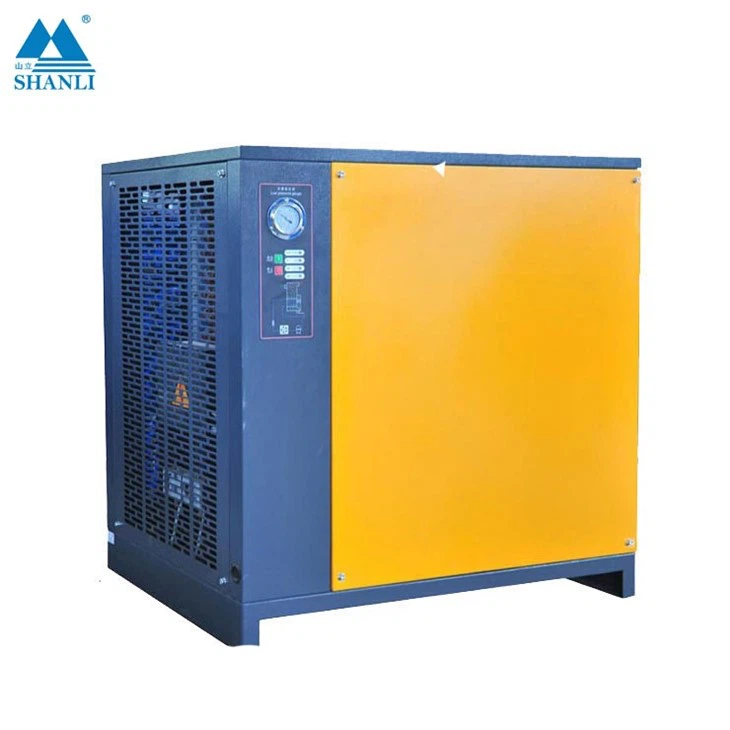
Refrigerated air dryers work by cooling the compressed air to remove moisture. They're relatively energy - efficient because they use a refrigeration cycle similar to a refrigerator. The power consumption of a refrigerated air dryer depends on its capacity and the temperature difference it needs to achieve. Smaller refrigerated air dryers used in light - industrial or home applications may consume as little as a few hundred watts, while larger ones for heavy - duty industrial use can consume several kilowatts. If you're looking for an economical option, you might want to check out our Economical Refrigerated Air Dryer.
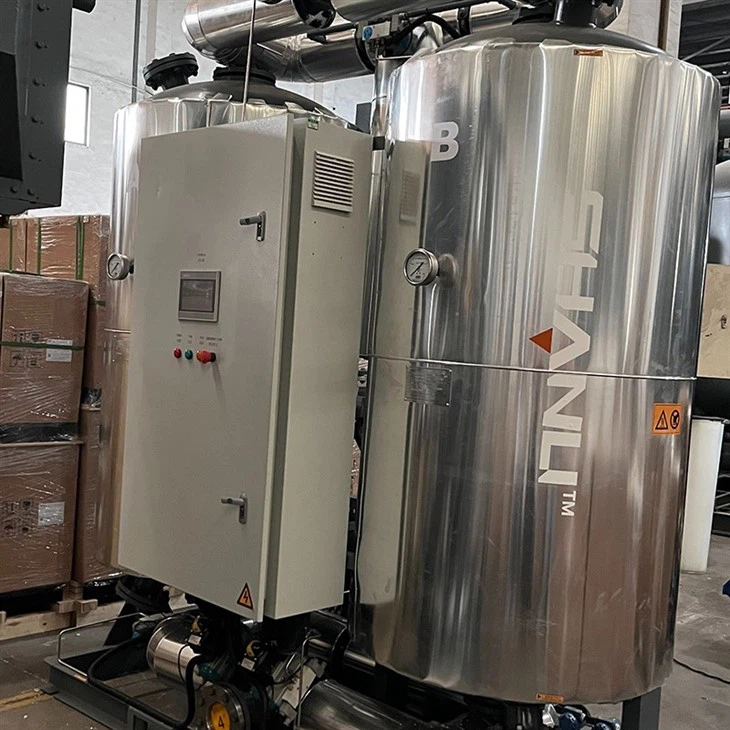
On the other hand, desiccant air dryers use desiccant materials to adsorb moisture from the compressed air. These dryers usually consume more power because they need to regenerate the desiccant periodically. Regeneration can involve heating the desiccant to drive off the adsorbed moisture, which requires a significant amount of energy. Our Hankison Desiccant Air Dryer is a high - quality desiccant dryer, but you need to be aware of its relatively higher power consumption compared to refrigerated ones.
Capacity
The capacity of an air dryer, measured in cubic feet per minute (CFM) or liters per second (L/s), also affects power consumption. A larger - capacity air dryer is designed to handle more compressed air flow. Naturally, it will need more power to operate effectively. If you oversize an air dryer for your application, you'll end up wasting energy. Conversely, an undersized dryer won't be able to meet your moisture - removal requirements, and you might face issues like corrosion in your compressed air system. So, it's crucial to choose the right capacity based on your actual needs.
Operating Conditions
The operating conditions of the air dryer can have a big impact on power consumption. For example, if the inlet temperature of the compressed air is high, the air dryer will have to work harder to cool it down (in the case of refrigerated dryers) or remove the moisture (in the case of desiccant dryers). This means more power will be consumed. Similarly, if the ambient temperature around the air dryer is high, the cooling system will be less efficient, leading to increased power usage.
Another factor is the humidity of the incoming compressed air. Higher humidity means more moisture needs to be removed, which again requires more energy. Some air dryers are equipped with advanced controls that can adjust their operation based on the actual moisture content and temperature of the incoming air, helping to optimize power consumption.
Efficiency of the Air Dryer
The efficiency of the air dryer itself is a key determinant of power consumption. Modern air dryers are designed with advanced technologies to improve energy efficiency. For instance, some refrigerated air dryers use variable - speed drives (VSDs). These drives can adjust the compressor speed according to the actual air demand, reducing power consumption during periods of low demand.
Some desiccant air dryers use heat - less regeneration methods or waste - heat regeneration methods. Heat - less regeneration dryers use a small portion of the dried compressed air to regenerate the desiccant, while waste - heat regeneration dryers use the heat from other processes in the plant to regenerate the desiccant, saving a significant amount of energy.
Let's talk a bit about the power consumption numbers. As I mentioned earlier, small refrigerated air dryers for home or small - scale industrial use can consume around 300 - 500 watts. Medium - sized industrial refrigerated air dryers with a capacity of around 100 - 300 CFM might consume 1 - 3 kilowatts. Large industrial refrigerated air dryers with capacities over 1000 CFM can consume 5 - 10 kilowatts or more.
Desiccant air dryers generally consume more power. A small desiccant dryer with a capacity of 50 - 100 CFM might consume 2 - 5 kilowatts, while large desiccant dryers used in heavy - industrial applications can consume 10 - 20 kilowatts or even more, depending on the regeneration method and other factors.
If you're in the market for an air dryer and want to manage your power consumption effectively, here are some tips:
- Do a Load Calculation: Before buying an air dryer, accurately calculate your compressed air demand. This will help you choose the right - sized dryer and avoid over - or under - sizing.
- Consider Energy - Efficient Models: Look for air dryers with features like VSDs, heat - less regeneration, or waste - heat regeneration. These technologies can significantly reduce power consumption.
- Maintain Your Air Dryer: Regular maintenance, such as cleaning the filters, checking the refrigerant levels (for refrigerated dryers), and inspecting the desiccant (for desiccant dryers), can ensure that your air dryer operates at peak efficiency, reducing power consumption.
We also offer a Water Fan Cooler Cold Water Air Cooler Ice Water Air Cooler Water Cooler Air Cooler which can be a great addition to your air - drying system in some cases, helping to improve overall efficiency and potentially reduce power consumption.
In conclusion, the power consumption of an air dryer machine depends on multiple factors, including the type, capacity, operating conditions, and efficiency of the dryer. By understanding these factors and making informed choices, you can not only meet your compressed air drying needs but also save on energy costs.
If you're interested in learning more about our air dryer machines or have any questions regarding power consumption, don't hesitate to reach out. We're here to help you find the best air dryer solution for your specific requirements and guide you on how to optimize its power usage. Whether you're a small business or a large industrial enterprise, we have the expertise and products to meet your needs. Let's start a conversation about your air - drying needs and how we can work together to achieve your goals.
References
- Compressed Air and Gas Institute (CAGI) standards and publications on air dryer performance and energy efficiency.
- Manufacturer's technical documentation for various air dryer models.
- Industry research reports on compressed air system energy management.
