

What is the pressure in a water chiller system? Well, as a water chiller supplier, I've dealt with this question quite a bit. Let's break it down and understand what pressure means in a water chiller system.
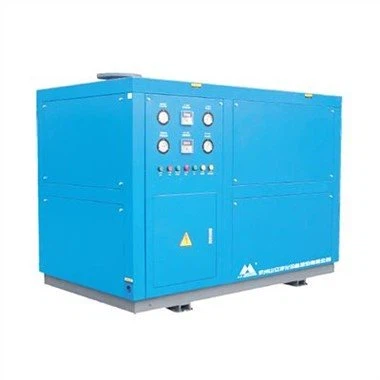
First off, pressure in a water chiller system plays a crucial role. It's not just some random number on a gauge; it affects how the whole system functions. There are basically two main types of pressure we need to talk about: the refrigerant pressure and the water pressure.
Let's start with refrigerant pressure. The refrigerant is like the life - blood of the water chiller system. It's what absorbs and releases heat to cool the water. In a typical water chiller, there are two sides when it comes to refrigerant pressure: the high - pressure side and the low - pressure side.
On the high - pressure side, the refrigerant is in a compressed state. After the compressor squeezes the refrigerant gas, its pressure goes way up. This high - pressure refrigerant then moves to the condenser. Here, it releases the heat it picked up from the water. The condenser is like a radiator, and the high - pressure refrigerant transfers its heat to the surrounding air or to a cooling water source. If the high - pressure side pressure is too high, it could be a sign of problems. Maybe the condenser is dirty, and the heat transfer isn't happening as efficiently as it should. Or perhaps there's a blockage in the refrigerant lines.
On the other hand, the low - pressure side is where the magic of cooling starts. After the refrigerant releases its heat in the condenser, it passes through an expansion valve. This valve reduces the pressure of the refrigerant, and it turns into a low - pressure, low - temperature mixture. The low - pressure refrigerant then enters the evaporator. In the evaporator, it absorbs heat from the water that needs to be cooled. If the low - pressure side pressure is too low, it might mean there's a refrigerant leak or the expansion valve isn't working properly.
Now, let's talk about water pressure. Water is used in the water chiller system to either cool the condenser or to be cooled itself. When water is used to cool the condenser, it needs to flow at a certain pressure to ensure efficient heat transfer. If the water pressure is too low, the water might not be able to carry away the heat from the condenser effectively. This can lead to an increase in the refrigerant high - pressure side pressure, which we know can cause problems for the system.
When water is the medium being cooled, proper water pressure is also essential. The water needs to flow through the evaporator at the right speed and pressure. If the pressure is too high, it could put extra stress on the pipes and components of the system, increasing the risk of leaks. If it's too low, the water might not be cooled evenly, and the temperature of the chilled water might not reach the desired level.
So, how do we measure and control these pressures? Well, most water chiller systems come with pressure gauges. These gauges are like the eyes of the system, allowing us to keep an eye on the refrigerant and water pressures. For refrigerant pressure, we can adjust the compressor and the expansion valve. If the high - pressure side is too high, we might need to clean the condenser or check for blockages. If the low - pressure side is too low, we need to look for refrigerant leaks and repair them.
For water pressure, we can use pumps and valves. Pumps are used to increase the water pressure, and valves can be adjusted to control the flow rate and pressure. By carefully monitoring and adjusting these components, we can keep the pressures in the water chiller system within the optimal range.
Now, depending on the type of water chiller you have, the pressure requirements can vary. For example, an Evaporative Pre Cooler works by using evaporation to pre - cool the air before it enters the condenser. This can affect the refrigerant pressure in the system. The evaporative process can help reduce the load on the condenser, which might result in a more stable high - pressure side refrigerant pressure.
A Thermoelectric Water Chiller uses the Peltier effect to cool the water. These chillers have different pressure characteristics compared to traditional compressor - based chillers. Since there's no refrigerant compression in the same way, the pressure considerations are mainly focused on the water flow through the thermoelectric modules.
A Recirculating Water Chiller continuously circulates the same water through the system. Maintaining the right water pressure is crucial for this type of chiller. If the water pressure drops, the recirculation might not be efficient, and the cooling performance can suffer.
As a water chiller supplier, I've seen all sorts of pressure - related issues in the field. One time, a customer called saying their chiller wasn't cooling properly. When we checked the pressure gauges, we found that the high - pressure side refrigerant pressure was extremely high. After some investigation, we discovered that the condenser was clogged with dirt and debris. Once we cleaned the condenser, the pressure dropped back to normal, and the chiller started working as it should.
Another instance involved a recirculating water chiller. The customer noticed that the water temperature wasn't getting as cold as it used to. We checked the water pressure and found that it was too low. It turned out that the pump had a malfunction, and it wasn't able to maintain the proper water pressure. After replacing the pump, the water pressure returned to normal, and the chiller was back to its cooling best.
In conclusion, understanding the pressure in a water chiller system is vital for its proper operation. Whether it's the refrigerant pressure or the water pressure, keeping these within the right range ensures efficient cooling, reduces the risk of breakdowns, and extends the lifespan of the chiller. If you're having any issues with the pressure in your water chiller system or if you're looking to purchase a new water chiller, don't hesitate to reach out. We're here to help you find the best solution for your cooling needs.
References
- ASHRAE Handbook of Refrigeration
- Chiller System Operation and Maintenance Manuals
