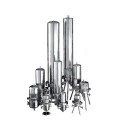
As a supplier of heatless desiccant air dryers, I often encounter inquiries from customers about the suitability of our products in low-temperature environments. This topic is not only relevant to those in industries where temperature control is crucial but also to anyone looking to optimize their air drying systems. In this blog, I will delve into the technical aspects of heatless desiccant air dryers and explore whether they can be effectively used in low-temperature settings.
How Heatless Desiccant Air Dryers Work
Before discussing their performance in low temperatures, it's essential to understand the basic working principle of heatless desiccant air dryers. These dryers use a desiccant material, such as silica gel or activated alumina, to adsorb moisture from the compressed air. The process typically involves two towers filled with desiccant. One tower is in the adsorption phase, removing moisture from the incoming compressed air, while the other is in the regeneration phase. During regeneration, a small portion of the dried air is used to purge the moisture from the desiccant in the second tower. This cycle alternates between the two towers to ensure continuous drying of the compressed air.


Challenges in Low-Temperature Environments
Low-temperature environments present several challenges for heatless desiccant air dryers. One of the primary concerns is the reduced adsorption capacity of the desiccant at lower temperatures. As the temperature drops, the desiccant's ability to attract and hold moisture decreases. This can lead to a higher dew point in the dried air, meaning that the air still contains more moisture than desired.
Another challenge is the potential for ice formation. If the compressed air contains water vapor and the temperature drops below the freezing point, ice can form in the dryer's components, such as the desiccant beds, valves, and piping. Ice formation can block the flow of air, damage the equipment, and reduce the dryer's efficiency.
Overcoming the Challenges
Despite these challenges, heatless desiccant air dryers can still be used in low-temperature environments with proper precautions. One solution is to preheat the incoming compressed air. By raising the temperature of the air before it enters the dryer, the desiccant's adsorption capacity can be improved. This can be achieved using a Heated Airer Air Dryer Heat Exchanger. The heat exchanger transfers heat from a hot fluid, such as steam or hot water, to the compressed air, increasing its temperature and reducing the risk of ice formation.
Another approach is to use a desiccant with a higher adsorption capacity at low temperatures. Some desiccants are specifically designed to perform well in cold conditions. These desiccants have a higher affinity for moisture even at lower temperatures, ensuring better drying performance.
Proper insulation of the dryer and its piping is also crucial in low-temperature environments. Insulation helps to maintain the temperature of the compressed air and prevents heat loss. This reduces the risk of ice formation and ensures that the dryer operates efficiently.
Case Studies
To illustrate the effectiveness of heatless desiccant air dryers in low-temperature environments, let's look at a few case studies.
In a food processing plant located in a cold climate, the plant was experiencing issues with moisture in its compressed air system. The compressed air was used for various processes, including packaging and pneumatic conveying. The moisture was causing corrosion in the equipment and affecting the quality of the products. The plant installed a heatless desiccant air dryer with a preheating system using a Heated Airer Air Dryer Heat Exchanger. The preheating system raised the temperature of the incoming compressed air, improving the desiccant's adsorption capacity. As a result, the dew point of the dried air was significantly reduced, and the plant was able to eliminate the moisture-related issues.
In another case, a pharmaceutical company needed to maintain a low dew point in its compressed air system for its critical manufacturing processes. The company was located in an area with cold winters. They installed a heatless desiccant air dryer with a high-capacity desiccant designed for low-temperature applications. The dryer was also properly insulated to prevent heat loss. The combination of the high-capacity desiccant and insulation allowed the dryer to operate effectively in the low-temperature environment, ensuring a consistent and low dew point in the compressed air.
Benefits of Using Heatless Desiccant Air Dryers in Low-Temperature Environments
Despite the challenges, there are several benefits to using heatless desiccant air dryers in low-temperature environments. One of the main advantages is energy efficiency. Heatless desiccant air dryers do not require external heat sources for regeneration, which can result in significant energy savings compared to heated desiccant air dryers.
Another benefit is the simplicity of the system. Heatless desiccant air dryers have fewer components and are easier to maintain compared to other types of air dryers. This makes them a reliable choice for industries where downtime is costly.
Conclusion
In conclusion, heatless desiccant air dryers can be used in low-temperature environments with proper precautions. By preheating the incoming compressed air, using a desiccant with a high adsorption capacity at low temperatures, and ensuring proper insulation, these dryers can effectively remove moisture from the compressed air even in cold conditions.
If you are considering using a heatless desiccant air dryer in a low-temperature environment, I encourage you to [contact us](insert your real contact method here if available). Our team of experts can provide you with more information about our products and help you select the right dryer for your specific needs. We also offer a range of accessories, such as Dessicant Air Dryer Heated Clothes Dryer and Dry Tech Electronic Dryer, to enhance the performance of your air drying system.
References
- "Compressed Air and Gas Handbook" by George F. Sheppard
- "Industrial Drying Technology" by Arun S. Mujumdar