

Pore size is a critical factor that significantly influences the performance of a sterilization filter. As a leading supplier of sterilization filters, we understand the intricate relationship between pore size and filter efficacy. In this blog, we will delve into how pore size affects various aspects of a sterilization filter's performance, including filtration efficiency, flow rate, and compatibility with different applications.
Filtration Efficiency
Filtration efficiency is perhaps the most crucial performance metric for a sterilization filter. It refers to the filter's ability to remove microorganisms and other contaminants from a fluid or gas stream. Pore size plays a direct role in determining filtration efficiency.
A smaller pore size generally leads to higher filtration efficiency. This is because smaller pores can physically block the passage of microorganisms and particles that are larger than the pore diameter. For instance, in a Sterilization Grade Filter, a pore size of 0.22 micrometers is commonly used for sterilizing applications. This size is small enough to trap most bacteria, yeasts, and fungi, preventing them from passing through the filter.
However, it's important to note that filtration efficiency is not solely determined by pore size. Other factors such as the filter media's structure, surface charge, and the nature of the contaminants also play a role. For example, some microorganisms may have a deformable structure that allows them to squeeze through pores that are slightly smaller than their nominal size. In such cases, the filter media's surface properties can help to capture these microorganisms through electrostatic or hydrophobic interactions.
Flow Rate
While a smaller pore size can enhance filtration efficiency, it often comes at the cost of reduced flow rate. Flow rate refers to the volume of fluid or gas that can pass through the filter per unit of time. As the pore size decreases, the resistance to flow increases, resulting in a lower flow rate.
This is because smaller pores create a more tortuous path for the fluid or gas to travel through the filter media. The fluid or gas has to navigate through a network of narrow channels, which slows down its movement. For example, in a Sterilizing Air Filter, a filter with a very small pore size may require a higher pressure differential to maintain an acceptable flow rate.
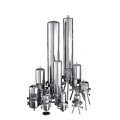

In practical applications, finding the right balance between filtration efficiency and flow rate is crucial. A filter with a very high filtration efficiency but a very low flow rate may not be suitable for applications that require a large volume of fluid or gas to be processed quickly. On the other hand, a filter with a high flow rate but low filtration efficiency may not provide adequate sterilization.
Compatibility with Different Applications
The pore size of a sterilization filter also affects its compatibility with different applications. Different applications have different requirements in terms of the size and type of contaminants that need to be removed, as well as the flow rate and pressure conditions.
For example, in the pharmaceutical industry, Sterilization Water Filter are commonly used to remove bacteria and other microorganisms from water used in the production of drugs. A pore size of 0.22 micrometers is typically recommended for this application to ensure the removal of most bacteria. However, in some cases, a smaller pore size may be required to remove viruses or other smaller contaminants.
In the food and beverage industry, sterilization filters are used to remove microorganisms from liquids such as juices, milk, and beer. The pore size requirements for these applications may vary depending on the specific product and the level of sterilization required. For example, a filter with a larger pore size may be sufficient for removing bacteria from beer, while a smaller pore size may be needed for sterilizing milk.
Impact on Filter Lifespan
Pore size can also have an impact on the lifespan of a sterilization filter. A filter with a smaller pore size is more likely to become clogged with contaminants over time, which can reduce its filtration efficiency and flow rate. This is because smaller pores are more easily blocked by particles and microorganisms.
To extend the lifespan of a filter, it's important to choose the right pore size based on the application and the expected level of contamination. In some cases, pre-filters with a larger pore size can be used to remove larger particles and reduce the load on the main sterilization filter. This can help to prevent premature clogging and extend the lifespan of the filter.
Conclusion
In conclusion, pore size is a critical factor that affects the performance of a sterilization filter in multiple ways. It influences filtration efficiency, flow rate, compatibility with different applications, and filter lifespan. As a supplier of sterilization filters, we offer a wide range of filters with different pore sizes to meet the diverse needs of our customers.
If you are in the market for a sterilization filter and need help choosing the right pore size for your application, please feel free to contact us. Our team of experts is available to provide you with technical advice and guidance to ensure that you select the most suitable filter for your needs. We look forward to the opportunity to work with you and help you achieve your sterilization goals.
References
- ASTM International. (2019). Standard Test Method for Determining the Bubble Point and Mean Flow Pore Size of Membrane Filters by Automated Liquid Porosimetry. ASTM F316 - 19.
- ISO 20482:2017. Fine bubbles in liquids - Definitions and measurement methods.
- Pharmaceutical Engineering: Principles and Practices. Edited by Michael J. Akers.
