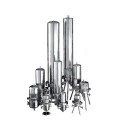
The size of a heated blower air dryer plays a crucial role in determining its performance, and understanding this relationship is essential for anyone in the market for such equipment. As a supplier of heated blower air dryers, I've witnessed firsthand how size impacts various aspects of these machines, from drying capacity to energy efficiency. In this blog post, I'll delve into the details of how the size of a heated blower air dryer affects its performance, and why it matters when making a purchasing decision.
Drying Capacity
One of the most significant ways in which the size of a heated blower air dryer affects its performance is through its drying capacity. Larger dryers typically have a higher drying capacity, meaning they can remove more moisture from the air in a given period. This is because larger dryers often come with more powerful blowers and heating elements, allowing them to process a greater volume of air.
For industrial applications where large volumes of air need to be dried quickly, a larger heated blower air dryer is usually the better choice. For example, in a manufacturing plant where products are being dried as part of the production process, a high-capacity dryer can ensure that the drying process is completed efficiently, reducing production time and increasing overall productivity.
On the other hand, smaller dryers are more suitable for applications with lower air volume requirements. In a small workshop or a home setting, a smaller dryer can effectively dry the air in a confined space without the need for excessive power consumption. The Compressed Air Heater Compact Dry Ec is a great example of a compact dryer that offers sufficient drying capacity for smaller spaces.
Energy Efficiency
The size of a heated blower air dryer also has a direct impact on its energy efficiency. Generally, larger dryers consume more energy due to their more powerful components. However, this doesn't necessarily mean that they are less efficient. In fact, larger dryers can sometimes be more energy-efficient in high-volume applications because they can complete the drying process more quickly.
When a dryer can dry a large volume of air in a short period, it spends less time operating, which can result in lower overall energy consumption. Additionally, many modern large dryers are designed with advanced energy-saving features, such as variable speed blowers and intelligent control systems, which can further optimize energy usage.
Smaller dryers, on the other hand, are inherently more energy-efficient for low-volume applications. Since they are designed to handle smaller air volumes, they don't require as much power to operate. This makes them a cost-effective choice for applications where energy consumption is a major concern.
Noise Level
Noise level is another important factor affected by the size of a heated blower air dryer. Larger dryers, with their more powerful blowers and motors, tend to produce more noise than smaller ones. In an industrial setting, where noise may not be a significant issue, this may not be a major concern. However, in a residential or office environment, excessive noise can be a nuisance.
Smaller dryers are generally quieter because they have less powerful components. They are a better choice for applications where noise reduction is important. The Mist Spraying Air Cooler Coolar Fan Water Air Cooler is a small and relatively quiet option that can be used in environments where noise needs to be kept to a minimum.
Space Requirements
The physical size of a heated blower air dryer determines its space requirements. Larger dryers are bulkier and require more space for installation. This can be a limiting factor in some applications, especially in facilities with limited floor space.
Smaller dryers, on the other hand, are more compact and can be easily installed in tight spaces. They are a great option for small workshops, laboratories, or any other location where space is at a premium.
Maintenance and Durability
The size of a heated blower air dryer can also influence its maintenance requirements and durability. Larger dryers often have more complex components, which may require more frequent maintenance. However, they are also typically built with more robust materials and can withstand heavy use over a longer period.
Smaller dryers are generally simpler in design and may require less maintenance. However, they may not be as durable as larger ones, especially in high-demand applications. It's important to consider the expected usage and maintenance capabilities when choosing the size of a dryer.
Cost
Cost is always a significant factor when purchasing a heated blower air dryer. Larger dryers are usually more expensive than smaller ones due to their higher capacity and more advanced features. However, the cost of a dryer should not be the only consideration. It's important to evaluate the overall value, taking into account factors such as energy efficiency, drying capacity, and durability.
In some cases, investing in a larger, more expensive dryer can result in long-term cost savings due to its higher efficiency and longer lifespan. On the other hand, for budget-conscious buyers or applications with lower requirements, a smaller, more affordable dryer may be the better choice.
Choosing the Right Size
When choosing the size of a heated blower air dryer, it's important to consider the specific requirements of your application. Here are some key factors to keep in mind:


- Air Volume Requirements: Determine the volume of air that needs to be dried. This will help you decide whether a small, medium, or large dryer is needed.
- Space Availability: Consider the available space for installation. If space is limited, a smaller dryer may be the only option.
- Energy Efficiency: Evaluate the energy consumption of different-sized dryers and choose one that offers the best balance between capacity and energy usage.
- Noise Level: If noise is a concern, opt for a smaller, quieter dryer.
- Budget: Set a budget and compare the costs of different-sized dryers. Remember to consider the long-term costs, including energy consumption and maintenance.
Conclusion
In conclusion, the size of a heated blower air dryer has a significant impact on its performance, energy efficiency, noise level, space requirements, maintenance, and cost. As a supplier, I understand that choosing the right size is crucial for ensuring that the dryer meets your specific needs. Whether you need a high-capacity dryer for industrial applications or a compact dryer for a small space, there is a solution available.
If you're in the market for a heated blower air dryer and need help choosing the right size, I encourage you to [contact us](INSERT HOW TO CONTACT HERE). Our team of experts can provide you with detailed information and guidance to help you make an informed decision. We offer a wide range of dryers, including the Silica Gel Air Dryer, to meet the diverse needs of our customers.
References
- ASHRAE Handbook - HVAC Systems and Equipment. American Society of Heating, Refrigerating and Air-Conditioning Engineers.
- Industrial Drying Technology. Edited by Arun S. Mujumdar. Marcel Dekker, Inc.