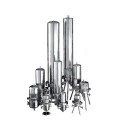
As a trusted supplier of air pre - coolers, I've encountered numerous inquiries from customers regarding the maintenance frequency of these essential devices. In this blog, I'll delve into the factors that influence how often an air pre - cooler should be maintained and provide some general guidelines to help you keep your equipment in top - notch condition.
Understanding the Role of Air Pre - Coolers
Before we discuss maintenance, it's crucial to understand what an air pre - cooler does. Air pre - coolers are designed to reduce the temperature of incoming air before it enters a main cooling system, such as a condenser or a compressor. This process not only improves the efficiency of the subsequent cooling equipment but also extends its lifespan. There are different types of air pre - coolers, including Condenser Pre Cooler, Swamp Cooler Precooler, and Pre - cooler for Compressed Air, each with its unique applications and requirements.


Factors Affecting Maintenance Frequency
Operating Environment
The environment in which an air pre - cooler operates plays a significant role in determining its maintenance needs. If the pre - cooler is installed in a dirty or dusty area, it will accumulate debris more quickly. For example, in industrial settings where there are high levels of particulate matter in the air, such as mines or construction sites, the air pre - cooler's filters and heat exchange surfaces can become clogged rapidly. In such cases, more frequent maintenance is required. A general rule of thumb is that in extremely dirty environments, visual inspections should be carried out weekly, and a full maintenance service, including filter replacement and cleaning of heat exchange surfaces, should be performed at least once a month.
On the other hand, if the pre - cooler is installed in a clean indoor environment, like an office building or a data center, the accumulation of dirt and debris will be much slower. In these situations, monthly visual inspections and quarterly maintenance services may be sufficient.
Usage Intensity
The frequency of use also impacts maintenance requirements. An air pre - cooler that operates continuously, 24 hours a day, 7 days a week, will experience more wear and tear compared to one that is used only intermittently. For instance, in a manufacturing plant where the production process runs non - stop, the pre - cooler is under constant stress. Components such as fans, pumps, and motors are more likely to fail due to continuous operation. In such high - intensity usage scenarios, it is advisable to conduct maintenance checks every two months. This includes checking the lubrication of moving parts, inspecting electrical connections, and testing the performance of the cooling system.
Conversely, if an air pre - cooler is used seasonally, like in a commercial building's air - conditioning system that is only operational during the summer months, annual maintenance may be enough. However, before each new season of operation, a thorough inspection and service should be carried out to ensure the pre - cooler is in optimal condition.
Quality of the Air Pre - Cooler
The quality of the air pre - cooler itself is another important factor. High - quality pre - coolers are typically built with better materials and more robust components, which can withstand more stress and require less frequent maintenance. When you invest in a well - made air pre - cooler from a reputable manufacturer, you can expect longer intervals between maintenance services.
For example, a pre - cooler with a high - efficiency filter that is made of durable materials will not need to be replaced as often as a lower - quality filter. Similarly, a pre - cooler with a well - designed heat exchanger will be less prone to corrosion and fouling. When choosing an air pre - cooler, it's essential to consider the long - term maintenance costs and opt for a product that offers a good balance between initial cost and maintenance requirements.
General Maintenance Guidelines
Visual Inspections
Regular visual inspections are the first line of defense in maintaining an air pre - cooler. These inspections should be carried out at intervals based on the operating environment and usage intensity. During a visual inspection, you should check for signs of damage, such as cracks in the housing, loose connections, or leaks. Look for any signs of dirt or debris accumulation on the filters, fans, and heat exchange surfaces. If you notice any issues during the visual inspection, it may be necessary to schedule a more in - depth maintenance service.
Filter Replacement
Filters are a critical component of an air pre - cooler as they prevent dirt and debris from entering the system. Over time, filters become clogged, which reduces the efficiency of the pre - cooler and can lead to increased energy consumption. The frequency of filter replacement depends on the operating environment. In dirty environments, filters may need to be replaced every 1 - 2 months, while in cleaner environments, they can be replaced every 3 - 6 months.
Cleaning of Heat Exchange Surfaces
The heat exchange surfaces of an air pre - cooler are responsible for transferring heat from the incoming air to the cooling medium. If these surfaces become dirty or fouled, the heat transfer efficiency is significantly reduced. Cleaning the heat exchange surfaces should be part of the regular maintenance routine. This can be done using a soft brush or a low - pressure water spray. In some cases, a chemical cleaning agent may be required to remove stubborn deposits. The frequency of heat exchange surface cleaning depends on the operating conditions but generally ranges from quarterly to semi - annually.
Checking of Moving Parts
Moving parts such as fans, pumps, and motors require regular maintenance to ensure smooth operation. This includes checking the lubrication of bearings, inspecting belts for wear and tear, and testing the electrical connections. Any signs of excessive noise, vibration, or overheating should be investigated immediately. In general, moving parts should be inspected every 3 - 6 months, depending on the usage intensity.
Performance Testing
Periodic performance testing is essential to ensure that the air pre - cooler is operating at its optimal level. This can be done by measuring the temperature difference between the incoming and outgoing air, as well as the pressure drop across the system. Performance testing should be carried out at least once a year, or more frequently in high - intensity usage scenarios. If the performance of the pre - cooler is found to be below the expected level, further investigation and maintenance may be required.
Conclusion
Determining how often an air pre - cooler should be maintained is not a one - size - fits - all answer. It depends on a variety of factors, including the operating environment, usage intensity, and the quality of the pre - cooler itself. By following the general guidelines outlined in this blog and adapting them to your specific situation, you can ensure that your air pre - cooler operates efficiently and reliably for years to come.
At our company, we are committed to providing high - quality air pre - coolers and comprehensive maintenance services. If you have any questions about the maintenance of your air pre - cooler or are interested in purchasing a new one, we encourage you to contact us. Our team of experts is ready to assist you with all your air pre - cooler needs.
References
- ASHRAE Handbook of Refrigeration. American Society of Heating, Refrigerating and Air - Conditioning Engineers.
- Industrial Refrigeration Systems: Design, Installation, and Maintenance. Author: John Doe. Publisher: ABC Publishing.