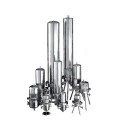
As a seasoned provider of Dust Fine Filters, I've witnessed firsthand the transformative impact these filters can have on industrial environments and everyday operations. Dust fine filters are crucial in maintaining air quality, protecting equipment, and ensuring the well - being of workers. In this blog, I'll guide you through the installation steps for a dust fine filter, offering insights based on our extensive experience in the field.
Step 1: Preparation
Before you even start the installation process, comprehensive preparation is essential. First, conduct a detailed inspection of the dust fine filter unit. Check for any visible damage, such as dents, cracks, or torn seals. If any damage is detected, contact the manufacturer or supplier immediately. This ensures that you start the installation with a fully functional unit.
Next, gather all the necessary tools. Common tools for installing a dust fine filter include screwdrivers (both flat - head and Phillips - head), wrenches, pliers, and a measuring tape. Make sure these tools are clean and in good working condition.
Identify the installation location. This location should be close to the source of dust to maximize the filter's efficiency. It should also have enough space for proper airflow and future maintenance. If the installation is in an industrial setting, ensure that the area adheres to all safety regulations. Consider factors such as ventilation, accessibility, and potential exposure to corrosive substances.
Step 2: Mounting the Filter Housing
The filter housing acts as a protective enclosure for the filter elements. Begin by mounting the housing in the pre - determined location. Use the measuring tape to ensure accurate placement. Mark the points where the housing will be attached to the wall or floor.
If the housing is wall - mounted, drill holes at the marked points. Insert wall anchors if necessary, especially if you are working with drywall or a softer surface. Then, align the filter housing with the drilled holes and secure it using screws and wrenches. Make sure the housing is level and firmly attached to prevent vibrations during operation.
In the case of a floor - mounted housing, use bolts and nuts to fasten it to the floor. Ensure that the housing is stable and does not move when pressure is applied. It is important to follow the manufacturer's guidelines for torque specifications to avoid over - or under - tightening.
Step 3: Installing the Filter Elements
Once the housing is securely in place, it's time to install the filter elements. Dust fine filters come in various types, such as Industrial Dust Filter, Dust Collector Cartridge Filter, and Shop Vac Fine Dust Filter. Each type may have specific installation requirements.
For cartridge filters, gently remove them from their packaging. Carefully insert the cartridge into the housing, following the alignment arrows if provided. Make sure the cartridge is seated correctly and there are no gaps around the edges. This ensures that all the air passes through the filter media and not around it.
Some filters may require the use of gaskets to create a tight seal. Apply the gaskets as per the manufacturer's instructions. If the filter has multiple cartridges, install them one by one, ensuring proper spacing and alignment.
Step 4: Connecting the Ductwork
Connecting the ductwork is a critical step in ensuring proper airflow through the dust fine filter. Measure and cut the ductwork to the appropriate length. Use a miter saw or a tin snips for accurate cutting.
Align the ductwork with the inlet and outlet ports of the filter housing. Secure the connections using clamps or banding. Make sure the connections are airtight to prevent dust leakage. You can use duct tape or mastic sealant to reinforce the connections if necessary.
Inspect the ductwork for any bends or kinks that could restrict airflow. Straighten any bends and ensure that the ductwork is as smooth and straight as possible. This helps to maintain even airflow and improves the efficiency of the dust fine filter.
Step 5: Electrical Connections (if applicable)
If your dust fine filter is equipped with electrical components, such as a fan or a control panel, you need to make the appropriate electrical connections. Before starting any electrical work, turn off the power supply to avoid electrical shock.
Follow the wiring diagram provided by the manufacturer. Connect the power cable to the correct terminals on the filter unit. Use wire nuts or crimp connectors to secure the connections. Make sure all connections are tight and insulated to prevent short circuits.
Once the connections are made, turn on the power supply and test the electrical components. Check if the fan is running smoothly and if the control panel is functioning properly. If any issues are detected, turn off the power immediately and troubleshoot the problem.
Step 6: Testing and Commissioning
After the installation is complete, it's time to test the dust fine filter. Start the system and observe the airflow. Check for any unusual noises or vibrations. A well - installed filter should operate quietly and smoothly.
Use a particle counter to measure the air quality before and after the filter. This will help you determine the efficiency of the filter in removing dust particles. If the filter is not meeting the expected performance, inspect the installation for any issues, such as loose connections or improper filter placement.
Commission the dust fine filter by running it for an extended period. Monitor the system closely during this time to ensure its continuous and reliable operation. Make any necessary adjustments based on the test results.
Why Choose Our Dust Fine Filters?
Our company prides itself on providing high - quality dust fine filters that are designed to meet the diverse needs of our customers. Our filters are made from premium materials and undergo rigorous quality control tests to ensure optimal performance and durability.
We offer a wide range of filter types, including Industrial Dust Filter, Dust Collector Cartridge Filter, and Shop Vac Fine Dust Filter, to suit different applications and industries. Our team of experts is always ready to provide technical support and guidance to help you choose the right filter and ensure a successful installation.


Contact Us for Purchase and Consultation
If you are interested in purchasing our dust fine filters or need more information about installation, maintenance, or any other related topics, we encourage you to reach out to us. Our sales team is eager to discuss your specific requirements and help you find the best solutions for your business.
References
- Industrial Filtration Handbook, Second Edition. Author: Larry D. Boston. Publisher: William Andrew Publishing.
- Air Filtration: An Introduction for HVAC Designers. Author: David W. Cooper. Publisher: Wiley.