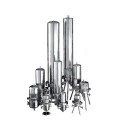
Hey there! As a supplier of Desiccant Air Dryers, I've seen firsthand how crucial it is to keep these machines in top - notch condition. One of the most important maintenance tasks is knowing when to replace the desiccant in a desiccant air dryer. In this blog, I'm gonna share some key signs that indicate it's time for a desiccant swap.
1. Increase in Dew Point
The dew point is a major indicator of how well your desiccant air dryer is working. Simply put, the dew point is the temperature at which air becomes saturated with water vapor and starts to condense. A properly functioning desiccant air dryer should maintain a low dew point in the compressed air output.
If you notice that the dew point of the compressed air coming out of your dryer is rising, it's a clear sign that the desiccant might be losing its effectiveness. You can use a dew point meter to regularly monitor this. When the dew point exceeds the recommended level for your specific application, it's a red flag. For example, in some industrial processes that require very dry air, like electronics manufacturing, a small increase in dew point can lead to product defects. So, if you see that the dew point is creeping up, it's probably time to consider replacing the desiccant in your Desiccant Dryer.
2. Pressure Drop Changes
Another sign to watch out for is an abnormal change in pressure drop across the desiccant bed. Pressure drop is the difference in pressure between the inlet and the outlet of the dryer. A certain amount of pressure drop is normal as the compressed air passes through the desiccant. However, if you notice a sudden and significant increase in pressure drop, it could mean that the desiccant is becoming clogged.
This clogging can happen due to a few reasons. Over time, dust, dirt, and other contaminants in the compressed air can get trapped in the desiccant. Also, if the desiccant has started to break down into smaller particles, these can block the air passages. A high pressure drop not only reduces the efficiency of the dryer but also puts extra strain on the compressor. If you're experiencing a large and unexpected increase in pressure drop, check out our Air Dryer And Filter options which can help with better air purification and potentially prevent desiccant clogging. But more often than not, a persistently high pressure drop is a sign that the desiccant needs to be replaced.
3. Visual Inspection
Sometimes, a simple visual inspection can tell you a lot about the condition of the desiccant. Open up the desiccant chamber (make sure to follow all safety procedures first) and take a look inside. If the desiccant beads or pellets look discolored, dirty, or have started to clump together, it's a bad sign.
Desiccant that has turned a dark color might be contaminated with oil or other substances from the compressed air. Clumping can occur when the desiccant has absorbed too much moisture and has lost its granular structure. In either case, the desiccant is likely not performing as well as it should. Our Desiccant Filter Dryer is designed to protect the desiccant to some extent, but eventually, the desiccant will wear out. If your visual inspection reveals these issues, it's time to get new desiccant.
4. Moisture in the Output Air
You can also tell if the desiccant needs replacing by checking for visible signs of moisture in the output air. This could be as simple as seeing water droplets in the air lines or noticing rust forming on downstream equipment. Moisture in the compressed air can cause a whole host of problems, from corroding pipes and valves to damaging sensitive machinery.

If you start to see these signs, it means that the desiccant is no longer effectively removing moisture from the air. In some cases, you might even be able to feel the dampness in the air if you hold your hand near the outlet. Don't ignore these obvious signs of moisture. Replacing the desiccant is usually the quickest and most effective way to solve this problem.
5. Excessive Regeneration Time
Desiccant air dryers typically go through a regeneration process to remove the moisture that the desiccant has absorbed. During regeneration, the desiccant is heated or exposed to a flow of dry air to drive out the water vapor. If you notice that the regeneration time has significantly increased, it's a sign that the desiccant is having a hard time releasing the moisture.
This could be because the desiccant has reached its saturation point and is holding onto the moisture more tightly. Longer regeneration times not only waste energy but also mean that the dryer is less efficient overall. If you're constantly having to wait longer for the regeneration cycle to complete, it's likely time to replace the desiccant.

6. Reduced Air Flow
A decrease in the overall air flow from the dryer can also indicate that the desiccant needs to be replaced. As the desiccant becomes less effective or gets clogged, it restricts the flow of compressed air through the dryer. You might notice that the air tools or equipment connected to the dryer are not performing as well as they used to.

For example, if you have a pneumatic drill that used to work at full power but now seems weaker, it could be due to reduced air flow from the dryer. A drop in air flow can also cause uneven operation of machinery and can lead to production delays. If you're experiencing reduced air flow and have ruled out other possible causes, it's a good idea to check the desiccant.
7. Increased Energy Consumption
When the desiccant in a desiccant air dryer starts to fail, the dryer has to work harder to achieve the same level of drying. This means that it consumes more energy. You might notice an increase in your electricity or gas bill if the dryer is powered by these sources.
Higher energy consumption is not only bad for your wallet but also for the environment. If you see a significant spike in your energy usage related to the dryer, it could be because the desiccant is no longer functioning properly. Replacing the desiccant can often bring the energy consumption back down to normal levels.
Conclusion
Keeping an eye out for these signs can help you determine when it's time to replace the desiccant in your desiccant air dryer. Regular maintenance and timely desiccant replacement are key to ensuring that your dryer operates efficiently and that your compressed air system remains in good condition.

If you're experiencing any of these issues with your desiccant air dryer or if you're just looking for high - quality desiccant and dryer products, we're here to help. Whether you need a new Desiccant Filter Dryer, a Desiccant Dryer, or an Air Dryer And Filter, we've got you covered. Reach out to us for more information and to start a purchase discussion. We'll work with you to find the best solutions for your specific needs.
References
- Compressed Air and Gas Institute (CAGI) standards on desiccant air dryers
- Technical manuals of leading desiccant air dryer manufacturers