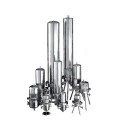
Hey there! I'm a supplier of self-cleaning filters, and I'm super stoked to talk about the cleaning method of a self-cleaning filter with a brush. It's a topic that's not only important but also pretty interesting, especially if you're in the market for a reliable filtration solution.
First off, let's understand what a self-cleaning filter with a brush is. These filters are designed to automatically clean themselves, which is a huge advantage over traditional filters that require manual cleaning. The brush in these filters plays a crucial role in the cleaning process. It helps to remove the debris and contaminants that accumulate on the filter media over time.
How Does the Brush Work?
The brush in a self-cleaning filter is typically attached to a motor or a drive mechanism. When the filter senses that it's getting clogged, it activates the cleaning cycle. The motor then rotates the brush, which moves across the surface of the filter media. As the brush moves, it sweeps away the dirt, dust, and other particles that have stuck to the filter.
The brush is usually made of a durable material that can withstand the constant friction and wear. It's designed to be gentle enough not to damage the filter media but strong enough to effectively remove the contaminants. Some brushes are made of nylon, while others are made of other synthetic materials.
The Cleaning Process
The cleaning process of a self-cleaning filter with a brush can be divided into a few steps. Let's take a closer look at each of these steps:
-
Sensing the Clog: The filter is equipped with sensors that monitor the pressure drop across the filter media. When the pressure drop exceeds a certain threshold, it indicates that the filter is getting clogged. At this point, the filter controller activates the cleaning cycle.
-
Activating the Brush: Once the cleaning cycle is activated, the motor starts to rotate the brush. The brush moves across the surface of the filter media in a systematic pattern. It may move in a circular motion, a linear motion, or a combination of both, depending on the design of the filter.
-
Removing the Debris: As the brush moves across the filter media, it dislodges the dirt and debris that have accumulated on it. The debris then falls into a collection chamber or is flushed out of the filter through a drain valve.
-
Resetting the Filter: After the cleaning cycle is complete, the filter controller resets the system. The sensors then monitor the pressure drop again to ensure that the filter is clean and functioning properly.
Advantages of Using a Self-Cleaning Filter with a Brush
There are several advantages to using a self-cleaning filter with a brush. Here are some of the key benefits:
-
Continuous Operation: One of the biggest advantages of a self-cleaning filter is that it allows for continuous operation. Unlike traditional filters that need to be shut down for cleaning, a self-cleaning filter can clean itself while it's still in operation. This means that there's no downtime, which is especially important in industrial applications where continuous filtration is required.
-
Reduced Maintenance: With a self-cleaning filter, you don't have to spend a lot of time and effort on manual cleaning. The brush does the job for you, which reduces the maintenance requirements and saves you money in the long run.
-
Improved Filtration Efficiency: The brush helps to keep the filter media clean, which ensures that the filter can maintain its high filtration efficiency. This means that you can get better-quality filtered water or air, depending on the application.
-
Longer Filter Life: By regularly cleaning the filter media, the brush helps to extend the life of the filter. This reduces the frequency of filter replacements, which is another cost-saving benefit.
Types of Self-Cleaning Filters with Brushes
There are different types of self-cleaning filters with brushes available in the market. Here are some of the common types:
-
Automatic Self Cleaning Filter: These filters are fully automated and can clean themselves without any manual intervention. They're ideal for applications where continuous filtration is required, such as in industrial processes and water treatment plants.
-
Self Cleaning Air Compressor Suction Filter: These filters are specifically designed for air compressors. They help to remove the dust and debris from the air before it enters the compressor, which protects the compressor from damage and improves its efficiency.


-
Industrial Self Cleaning Water Filter: These filters are used in industrial applications to remove impurities from water. They're designed to handle large volumes of water and can effectively remove a wide range of contaminants.
Maintenance Tips
While self-cleaning filters with brushes require less maintenance than traditional filters, it's still important to take some steps to ensure their proper functioning. Here are some maintenance tips:
-
Regular Inspections: It's a good idea to regularly inspect the filter to check for any signs of wear and tear. Look for any damage to the brush, the filter media, or the motor. If you notice any problems, it's important to address them as soon as possible.
-
Cleaning the Collection Chamber: The collection chamber where the debris is collected should be cleaned regularly. This will prevent the chamber from getting clogged and ensure that the cleaning process works effectively.
-
Lubricating the Motor: If the motor that drives the brush requires lubrication, make sure to follow the manufacturer's recommendations. Proper lubrication will help to extend the life of the motor and ensure smooth operation.
Conclusion
In conclusion, a self-cleaning filter with a brush is a great solution for anyone who needs a reliable and efficient filtration system. The brush plays a crucial role in the cleaning process, helping to keep the filter media clean and ensuring continuous operation. Whether you're looking for an Automatic Self Cleaning Filter, a Self Cleaning Air Compressor Suction Filter, or an Industrial Self Cleaning Water Filter, there's a self-cleaning filter with a brush that's right for you.
If you're interested in learning more about our self-cleaning filters or if you're looking to purchase one for your application, feel free to reach out to us. We'd be happy to discuss your needs and help you find the perfect filter for your requirements.
References
- Filtration Handbook, by Pall Corporation
- Industrial Filtration Technology, by Elsevier