Altitude can have a significant impact on how a water chiller unit works. As someone working with different types of water chillers as a supplier, I've seen firsthand how changes in elevation can cause various issues and affect performance. In this blog, I'll break down the effects of altitude on water chiller units and why it matters for anyone in the market for Recirculating Water Chiller, Water Cooled Water Chiller, or Thermoelectric Water Chiller.
Air Density and Cooling Capacity
One of the main things that changes with altitude is air density. As you go higher up, the air gets thinner, which means there are fewer air molecules per unit volume. And this drop in air density has a direct impact on the chiller's cooling capacity.
Most water chiller units rely on air-cooled condensers to reject heat. When the air is less dense, the ability of the air to absorb and carry away heat is reduced. This is because the heat transfer process between the refrigerant in the condenser and the surrounding air depends on the air's mass flow rate and its heat carrying capacity. With thinner air, the mass flow rate of the air across the condenser coils decreases, even if the fan speed remains the same.
Less heat transfer means that the chiller has a harder time getting rid of the heat it absorbs from the process it's cooling. As a result, the cooling capacity of the unit goes down. For instance, a chiller that can handle a certain amount of heat load at sea level might struggle to achieve the same performance at a higher altitude. So, if you're operating a chiller in a mountainous area or a high - elevation city, you need to account for this loss in cooling capacity when selecting a unit.
Refrigerant System Performance
The performance of the refrigerant system in a water chiller is also greatly affected by altitude. Refrigerants work by changing phase from a liquid to a gas and back again, absorbing and releasing heat in the process.
At higher altitudes, the lower atmospheric pressure affects the boiling and condensing points of the refrigerant. The boiling point of the refrigerant decreases as the pressure drops. In the evaporator, where the refrigerant absorbs heat and turns from a liquid to a gas, the lower boiling point can cause the refrigerant to boil off too quickly. This might lead to a situation where the evaporator doesn't fully utilize its heat transfer surface area, reducing the efficiency of the cooling process.
On the condenser side, the condensing pressure also decreases with altitude. The compressor in the chiller is designed to work within a certain range of pressures. When the condensing pressure drops, the compressor may not operate as efficiently. It might have to work harder to maintain the right pressure differential, which can increase energy consumption and wear and tear on the compressor components.
Fan and Blower Efficiency
Fan and blower performance is another aspect that's sensitive to altitude changes. As I mentioned earlier, the fan moves air across the condenser coils for heat rejection. The fan's performance is rated based on standard air density conditions, usually at or near sea level.
When the air density is lower at high altitudes, the fan's ability to move an equivalent mass of air is diminished. Even if the fan is spinning at the same speed, it can't move as much air as it would at a lower elevation. This reduced air movement further exacerbates the heat transfer problems in the condenser.
Some fans are designed with a variable speed control system. In high - altitude applications, these fans may need to run at higher speeds to compensate for the reduced air density. However, running the fans at higher speeds for extended periods can increase energy usage and also lead to more noise, which might be a concern in some settings.
Cooling Tower Performance (for Water - Cooled Chillers)
If you're using a Water Cooled Water Chiller, the cooling tower plays a crucial role in the overall cooling process. Cooling towers work by evaporating water to remove heat from the condenser water.
At high altitudes, the lower air pressure affects the water evaporation rate. Water evaporates more easily at lower pressures. While this might initially seem like a good thing as more evaporation means more heat removal, it can actually cause problems. The increased evaporation rate can lead to more water loss from the cooling tower. This means you'll have to replenish the water more frequently, which can be costly and may not be practical in areas where water is scarce.
Moreover, the lower air density can also affect the air - water contact in the cooling tower. The air flow through the tower may not be as effective at transferring heat from the water to the air, reducing the overall cooling efficiency of the tower.
Impact on Thermoelectric Water Chillers
Thermoelectric Water Chillers operate on a different principle compared to traditional vapor - compression chillers. They use the Peltier effect to create a temperature difference and transfer heat.
Altitude can still have an impact on thermoelectric chillers, mainly through the cooling of the hot side of the thermoelectric modules. These modules need to dissipate the heat they generate on the hot side to maintain their cooling performance. Similar to air - cooled condensers in vapor - compression chillers, the reduced air density at high altitudes makes it more difficult to remove heat from the hot side of the thermoelectric modules.

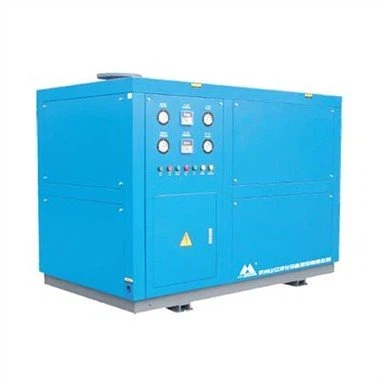
This can lead to an increase in the hot - side temperature, which in turn reduces the efficiency of the thermoelectric cooling process. The chiller may struggle to reach and maintain the desired cold - side temperature, and it may consume more power to try and compensate for the reduced heat dissipation.
Selecting the Right Chiller for High Altitude
When you're in the market for a water chiller unit and you're operating at a high altitude, there are several things to consider.
First, you need to calculate the derating factor for the cooling capacity. Manufacturers usually provide derating charts that show how much the cooling capacity of their chillers decreases with increasing altitude. Use these charts to select a chiller that can still meet your heat load requirements at the specific altitude of your location.
Second, look for chillers that are designed to handle high - altitude conditions. Some manufacturers offer models with enhanced fan designs or refrigerant systems that are optimized for lower air densities and pressures.
If you're considering a water - cooled chiller, make sure to factor in the additional water management requirements due to the increased evaporation at high altitudes. You may need to invest in a more efficient water treatment system to deal with the higher water turnover.
Conclusion
Altitude can have a far - reaching impact on the performance of water chiller units. From reduced cooling capacity and efficiency to increased energy consumption and water management issues, it's essential to understand these effects when selecting a chiller for a high - altitude location.
As a water chiller unit supplier, I'm here to help you navigate through these challenges. Whether you need a Recirculating Water Chiller for a laboratory application, a Water Cooled Water Chiller for an industrial process, or a Thermoelectric Water Chiller for a sensitive electronic cooling setup, we can provide the right solution for your needs.
If you're interested in learning more about our products and how they can perform at your specific altitude, don't hesitate to reach out. We're happy to discuss your requirements and guide you through the selection process. Let's work together to find the best water chiller unit for your application.
References
- ASHRAE Handbook - HVAC Systems and Equipment.
- Manufacturer's technical documentation on water chiller performance at different altitudes.