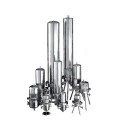
As a trusted supplier of sterilization filters, I often encounter inquiries from customers about the filtration efficiency of our products. Filtration efficiency is a critical parameter that determines the effectiveness of a sterilization filter in removing contaminants from a fluid or gas stream. In this blog post, I will delve into the concept of filtration efficiency, the factors that influence it, and how our sterilization filters achieve high levels of performance.
Understanding Filtration Efficiency
Filtration efficiency is typically defined as the percentage of particles or microorganisms removed from a fluid or gas stream by a filter. It is a measure of the filter's ability to capture and retain contaminants, preventing them from passing through to the downstream side. For sterilization filters, the goal is to achieve a high level of efficiency in removing a wide range of contaminants, including bacteria, viruses, fungi, and particulate matter.
The efficiency of a filter is often expressed in terms of its particle retention rating, which indicates the size of the smallest particles that the filter can effectively capture. For example, a filter with a particle retention rating of 0.2 microns is capable of removing particles that are 0.2 microns or larger in size. However, it's important to note that the particle retention rating alone does not provide a complete picture of a filter's performance. Other factors, such as the filter's construction, media type, and operating conditions, can also have a significant impact on its filtration efficiency.
Factors Affecting Filtration Efficiency
Several factors can influence the filtration efficiency of a sterilization filter. Understanding these factors is essential for selecting the right filter for your specific application and ensuring optimal performance. Here are some of the key factors to consider:
Particle Size and Distribution
The size and distribution of the particles or microorganisms in the fluid or gas stream play a crucial role in determining the filtration efficiency of a filter. Generally, smaller particles are more difficult to capture than larger ones, as they can pass through the filter media more easily. Therefore, filters with a higher particle retention rating are typically required for applications where the presence of small particles is a concern.
In addition to particle size, the distribution of particles in the fluid or gas stream can also affect filtration efficiency. A filter that is designed to capture a specific size range of particles may not be as effective in removing particles outside of that range. Therefore, it's important to consider the particle size distribution of the fluid or gas stream when selecting a filter.
Filter Media
The type of filter media used in a sterilization filter is another important factor that can affect its filtration efficiency. Different filter media have different properties, such as pore size, porosity, and surface area, which can impact their ability to capture and retain contaminants. For example, membrane filters are commonly used in sterilization applications because they have a uniform pore size and high filtration efficiency. However, they may be more prone to clogging than other types of filter media.
Other types of filter media, such as depth filters and pleated filters, can also be used in sterilization applications. Depth filters are designed to capture particles throughout the depth of the filter media, while pleated filters have a larger surface area, which can increase their filtration capacity. The choice of filter media will depend on the specific requirements of your application, such as the type and size of contaminants to be removed, the flow rate of the fluid or gas stream, and the operating conditions.
Operating Conditions
The operating conditions of a sterilization filter, such as the flow rate, pressure, temperature, and pH of the fluid or gas stream, can also have a significant impact on its filtration efficiency. For example, a high flow rate can reduce the contact time between the fluid or gas stream and the filter media, which can decrease the filter's ability to capture contaminants. Similarly, high pressure can cause the filter media to compact, reducing its porosity and increasing the risk of clogging.
Temperature and pH can also affect the performance of a filter. Some filter media may be sensitive to temperature or pH changes, which can cause them to degrade or lose their effectiveness. Therefore, it's important to select a filter that is compatible with the operating conditions of your application.
Achieving High Filtration Efficiency with Our Sterilization Filters
At our company, we are committed to providing high-quality sterilization filters that offer superior filtration efficiency and performance. Our filters are designed and manufactured using the latest technology and materials to ensure optimal performance in a wide range of applications. Here are some of the features and benefits of our sterilization filters:
Advanced Filter Media
We use a variety of advanced filter media in our sterilization filters, including membrane filters, depth filters, and pleated filters. Our membrane filters are made from high-quality polymers that have a uniform pore size and high filtration efficiency. They are capable of removing bacteria, viruses, and other microorganisms with a high degree of reliability.
Our depth filters are designed to capture particles throughout the depth of the filter media, providing a high level of filtration efficiency and capacity. They are ideal for applications where the presence of large amounts of particulate matter is a concern. Our pleated filters have a large surface area, which can increase their filtration capacity and reduce the risk of clogging. They are suitable for applications where a high flow rate is required.


Customizable Designs
We understand that every application is unique, and that's why we offer customizable designs for our sterilization filters. Our team of experts can work with you to develop a filter that meets your specific requirements, such as the particle retention rating, flow rate, pressure, temperature, and pH of the fluid or gas stream. We can also provide filters in a variety of sizes and configurations to fit your existing equipment.
Quality Assurance
We have a rigorous quality assurance program in place to ensure that our sterilization filters meet the highest standards of quality and performance. Our filters are tested and certified to meet various industry standards, such as ISO 13485, FDA, and CE. We also conduct regular quality control checks throughout the manufacturing process to ensure that our filters are free from defects and meet our customers' expectations.
Applications of Our Sterilization Filters
Our sterilization filters are used in a wide range of applications, including:
Pharmaceutical and Biotechnology
In the pharmaceutical and biotechnology industries, sterilization filters are used to remove bacteria, viruses, and other microorganisms from liquids and gases used in the production of drugs, vaccines, and other biopharmaceutical products. Our filters are designed to meet the strict regulatory requirements of these industries and provide a high level of filtration efficiency and reliability.
Food and Beverage
In the food and beverage industry, sterilization filters are used to remove contaminants from liquids and gases used in the production of food and beverages. Our filters can help to ensure the safety and quality of food and beverages by removing bacteria, fungi, and other microorganisms that can cause spoilage and contamination.
Medical and Healthcare
In the medical and healthcare industries, sterilization filters are used to remove contaminants from air and liquids used in hospitals, clinics, and other healthcare facilities. Our filters can help to prevent the spread of infections and diseases by removing bacteria, viruses, and other microorganisms from the air and water supply.
Conclusion
Filtration efficiency is a critical parameter that determines the effectiveness of a sterilization filter in removing contaminants from a fluid or gas stream. By understanding the factors that influence filtration efficiency and selecting the right filter for your specific application, you can ensure optimal performance and reliability. At our company, we are committed to providing high-quality sterilization filters that offer superior filtration efficiency and performance. Our filters are designed and manufactured using the latest technology and materials to meet the needs of a wide range of applications. If you are interested in learning more about our sterilization filters or would like to discuss your specific requirements, please contact us for a consultation. We look forward to working with you.
References
- "Filtration Efficiency: What It Is and How It Affects Your Application." Filtration + Separation, 2023.
- "Sterilization Filters: Principles and Applications." Journal of Pharmaceutical Sciences, 2022.
- "The Importance of Filtration Efficiency in the Pharmaceutical Industry." Pharmaceutical Technology, 2021.