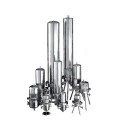
Hey there! As an industrial dust filter supplier, I often get asked about the filtration efficiency of these filters. So, I thought I'd take a moment to break it down for you.
First off, let's talk about what filtration efficiency actually means. In simple terms, it's the ability of a filter to remove particles from the air. The higher the filtration efficiency, the more particles the filter can capture. This is super important in industrial settings because it helps keep the air clean and safe for workers, and it also protects equipment from damage caused by dust and debris.
There are a few different ways to measure filtration efficiency. One common method is the Minimum Efficiency Reporting Value (MERV). MERV ratings range from 1 to 16, with higher numbers indicating better filtration. For example, a filter with a MERV rating of 13 can capture up to 90% of particles between 0.3 and 1.0 microns in size. That's pretty impressive!
Another way to measure filtration efficiency is through the Filtering Efficiency Rating (FER). This rating system is used specifically for industrial dust filters and takes into account factors like the type of dust being filtered, the airflow rate, and the pressure drop across the filter. A higher FER means the filter is more efficient at removing dust from the air.
So, what affects the filtration efficiency of an industrial dust filter? Well, there are a few key factors. First, the type of filter media plays a big role. Different materials have different levels of filtration efficiency. For example, a filter made from synthetic fibers may be more efficient at capturing small particles than a filter made from natural fibers.
The design of the filter also matters. Filters with a larger surface area can capture more particles, so they tend to have higher filtration efficiency. Additionally, the pleat design of the filter can affect how well it captures dust. Filters with more pleats have a larger surface area and can therefore capture more particles.
The operating conditions of the filter are also important. If the airflow rate is too high, the filter may not have enough time to capture all the particles. On the other hand, if the airflow rate is too low, the filter may become clogged more quickly, which can reduce its filtration efficiency.
Now, let's talk about some of the different types of industrial dust filters and their filtration efficiency. One popular type is the Dust Collector Cartridge Filter. These filters are designed to capture a wide range of dust particles, from large to small. They typically have a high filtration efficiency and can be used in a variety of industrial applications, such as woodworking, metalworking, and food processing.
Another type of filter is the Shop Vac Fine Dust Filter. These filters are specifically designed for use with shop vacuums and are very effective at capturing fine dust particles. They have a high filtration efficiency and can help keep your workshop clean and safe.
Finally, there's the Industrial Dust Filter. This is a general term for a variety of filters used in industrial settings. These filters can have different levels of filtration efficiency depending on their design and the type of dust they are intended to capture.


So, how do you choose the right industrial dust filter for your needs? Well, it depends on a few factors. First, you need to consider the type of dust you are dealing with. If you are working with large particles, you may not need a filter with a very high filtration efficiency. However, if you are working with fine dust particles, you will want to choose a filter with a higher MERV or FER rating.
You also need to consider the airflow rate and the pressure drop across the filter. If the airflow rate is too high, you may need a filter with a larger surface area to ensure that it can capture all the particles. If the pressure drop is too high, it can reduce the efficiency of your equipment, so you will want to choose a filter with a low pressure drop.
Finally, you need to consider your budget. Filters with higher filtration efficiency tend to be more expensive, so you need to balance your need for clean air with your budget.
In conclusion, the filtration efficiency of an industrial dust filter is an important factor to consider when choosing a filter for your industrial application. By understanding the different ways to measure filtration efficiency and the factors that affect it, you can choose the right filter for your needs. If you have any questions or need help choosing the right filter, don't hesitate to contact us. We're here to help you keep your workplace clean and safe.
If you're interested in purchasing an industrial dust filter, we'd love to have a chat with you about your specific requirements. Just reach out, and we can start a discussion on how we can meet your filtration needs and ensure a healthier, more productive work environment.
References
- ASHRAE Standard 52.2 - Method of Testing General Ventilation Air - Cleaning Devices for Removal Efficiency by Particle Size
- Industrial Filtration Handbook, various editions