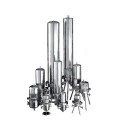
Air dryers are essential components in many industrial processes, especially those that require clean and dry compressed air. Among various types of air dryers, the heated desiccant air dryer stands out for its efficiency and reliability. As a supplier of heated desiccant air dryers, I've witnessed firsthand the critical role that air flow direction plays in the performance of these devices. In this blog post, I'll delve into the impact of air flow direction on the performance of a heated desiccant air dryer and explore how it affects the overall operation of the system.
Understanding Heated Desiccant Air Dryers
Before we discuss the impact of air flow direction, let's briefly understand how heated desiccant air dryers work. These dryers use a desiccant material, such as silica gel or activated alumina, to adsorb moisture from the compressed air. The desiccant is housed in two towers, and the dryer operates in a cyclic manner. While one tower is in the drying mode, adsorbing moisture from the incoming air, the other tower is in the regeneration mode, where the desiccant is heated to remove the adsorbed moisture.

The regeneration process is crucial for the continuous operation of the dryer. By heating the desiccant, the moisture is released, and the desiccant is restored to its original dry state, ready to adsorb more moisture in the next cycle. The efficiency of this regeneration process is significantly influenced by the air flow direction.
Impact of Air Flow Direction on Drying Performance
The air flow direction during the drying process affects how the compressed air comes into contact with the desiccant. In a typical heated desiccant air dryer, the compressed air enters the bottom of the drying tower and flows upward through the desiccant bed. This upward flow allows the air to come into intimate contact with the desiccant particles, maximizing the adsorption of moisture.
When the air flows upward, it moves against the force of gravity, which helps to distribute the air evenly across the desiccant bed. This even distribution ensures that all parts of the desiccant are utilized effectively, leading to a more efficient drying process. As a result, the outlet air has a lower dew point, indicating a higher level of dryness.
On the other hand, if the air flow direction is reversed, with the air entering the top of the tower and flowing downward, the performance may be compromised. The downward flow can cause channeling, where the air creates preferential paths through the desiccant bed, bypassing some of the desiccant particles. This reduces the contact area between the air and the desiccant, leading to less effective moisture adsorption and a higher dew point at the outlet.
Impact of Air Flow Direction on Regeneration Performance
The air flow direction during the regeneration process is equally important. During regeneration, hot air is passed through the desiccant bed to remove the adsorbed moisture. In most heated desiccant air dryers, the hot air flows in the opposite direction to the air flow during the drying process. That is, the hot air enters the top of the tower and flows downward.
This reverse flow direction during regeneration has several advantages. First, it helps to prevent the re - adsorption of moisture by the desiccant. As the hot air flows downward, it carries the released moisture out of the tower, reducing the chances of the desiccant re - absorbing the moisture before it can be removed from the system.
Second, the downward flow of hot air during regeneration helps to ensure that the desiccant at the bottom of the tower, which has adsorbed the most moisture during the drying process, is thoroughly regenerated. Since the hot air is at its hottest when it enters the top of the tower, it provides the necessary heat energy to drive off the moisture from the desiccant layers.
If the air flow direction during regeneration is the same as during the drying process (upward flow), the regeneration may be less efficient. The desiccant at the bottom of the tower may not receive enough heat to fully release the adsorbed moisture, leading to incomplete regeneration and reduced drying performance in the next cycle.
Practical Considerations for Air Flow Direction
In practice, the design of the heated desiccant air dryer is optimized to ensure the correct air flow direction during both the drying and regeneration processes. The dryer's internal components, such as inlet and outlet ports, valves, and baffles, are carefully engineered to direct the air flow as required.

However, improper installation or maintenance can sometimes lead to issues with air flow direction. For example, if the valves are not properly calibrated or if there are blockages in the air passages, the air flow may not follow the intended path. This can result in reduced drying efficiency, increased energy consumption, and premature wear of the desiccant.
As a supplier, we provide detailed installation and maintenance instructions to our customers to ensure that the air dryers are installed and operated correctly. We also offer technical support to troubleshoot any issues related to air flow direction or other performance problems.
Our Product Range
At our company, we offer a wide range of heated desiccant air dryers to meet the diverse needs of our customers. Our products include Heatless Heated Regeneration Desiccant Air Dryer, which combines the advantages of heatless and heated regeneration methods, providing high - efficiency drying with low energy consumption.
We also have Heated Large Desiccant Air Dryer, designed for large - scale industrial applications that require a high volume of dry compressed air. Additionally, our High Quality Air Compressor 28m3/min Desiccant Air Dryer is suitable for medium - sized industrial operations, offering reliable performance and excellent drying efficiency.
Conclusion
The air flow direction has a significant impact on the performance of a heated desiccant air dryer. The correct air flow direction during both the drying and regeneration processes is essential for efficient moisture adsorption and desorption, leading to lower dew points, reduced energy consumption, and longer desiccant life.
As a supplier of heated desiccant air dryers, we understand the importance of air flow direction and ensure that our products are designed and manufactured to optimize this critical factor. If you're in the market for a high - quality heated desiccant air dryer, we encourage you to contact us for more information. Our team of experts can help you select the right dryer for your specific needs and provide you with comprehensive support throughout the installation and operation process. Let's work together to ensure that your industrial processes run smoothly with clean and dry compressed air.
References
- ASHRAE Handbook - HVAC Systems and Equipment. American Society of Heating, Refrigerating and Air - Conditioning Engineers.
- Perry's Chemical Engineers' Handbook. McGraw - Hill Education.
- Compressed Air and Gas Handbook. Ingersoll Rand.