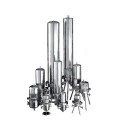
Can a sterilization filter be used in a sterile production environment? That's a question I get asked a lot as a supplier of sterilization filters. In today's blog post, I'm gonna delve into this topic to see if these filters can truly meet the requirements of a sterile production setting.
First off, let's understand what a sterile production environment is. It's an area where we need to avoid any kind of microbial contamination during the production process. This is super important in industries like pharmaceuticals, food and beverage, and biotechnology. In these fields, even the tiniest bit of contamination can lead to product spoilage, quality issues, or in some cases, serious health risks for consumers.
So, can a sterilization filter fit the bill? Well, sterilization filters are designed to remove microorganisms from fluids or gases. They work based on the principle of size exclusion. Most of these filters have pore sizes small enough to trap bacteria, fungi, and other microorganisms while allowing the fluid or gas to pass through. For instance, a typical sterilization filter might have a pore size of 0.2 microns or less. Bacteria are usually larger than this pore size, so they get caught in the filter matrix.
One of the key advantages of using sterilization filters in a sterile production environment is their high efficiency in microbial removal. They can achieve a high level of sterility assurance, which is crucial for maintaining product quality. For example, in the pharmaceutical industry, drugs need to be completely free of viable microorganisms to be safe for human use. Sterilization filters can help achieve this by providing a reliable barrier against contaminants.
Let's talk about the different types of sterilization filters available in the market. There are Sterilization Water Filter that are specifically designed to purify water. These filters are essential in industries where water is used as a raw material or for cleaning processes. They can remove bacteria, viruses, and other impurities from water, ensuring that it meets the strict quality standards required for sterile production.
Another type is the Filter Air Dryer Air Dyer Filter Air Compressor Dryer. In a sterile production environment, the air needs to be clean and free of contaminants. These filters not only remove microorganisms from the air but also help in drying the air, which is important for preventing the growth of mold and bacteria. They are commonly used in cleanrooms and other controlled environments.
Then there are Aseptic Filter that are used in applications where maintaining aseptic conditions is critical. These filters are often used in the food and beverage industry to prevent the growth of spoilage organisms in products like juices, milk, and beer. They can also be used in the pharmaceutical industry for sterile filling operations.
However, using a sterilization filter in a sterile production environment isn't as simple as just installing it and forgetting about it. There are some important factors to consider. First, the filter needs to be properly selected based on the specific requirements of the production process. For example, the flow rate, pressure, and temperature of the fluid or gas being filtered can all affect the performance of the filter. If the filter is too small for the flow rate, it might get clogged quickly, leading to a decrease in efficiency.
Second, the installation and maintenance of the filter are crucial. The filter needs to be installed correctly to ensure a proper seal and prevent any bypass of contaminants. Regular maintenance, such as cleaning and replacement, is also necessary to keep the filter working effectively. If the filter isn't maintained properly, it can become a source of contamination itself.
Third, validation and testing are essential. Before using a sterilization filter in a sterile production environment, it needs to be validated to ensure that it meets the required standards for microbial removal. This usually involves conducting tests to measure the filter's efficiency in removing microorganisms. Regular testing during operation is also important to detect any potential issues early on.
So, to answer the question, yes, a sterilization filter can definitely be used in a sterile production environment. But it requires careful consideration of various factors to ensure its proper operation and effectiveness. When used correctly, these filters can provide a reliable solution for maintaining the sterility of products and processes.
If you're in the market for sterilization filters for your sterile production environment, I'd love to have a chat with you. I can help you select the right filter based on your specific needs and provide you with all the information you need for proper installation and maintenance. Don't hesitate to reach out and let's start a conversation about how we can work together to meet your filtration requirements.
References


- Pharmaceutical Microbiology: Fundamentals and Applications, 3rd Edition
- Food Microbiology: An Introduction, 2nd Edition
- Biotechnology: Principles and Processes, 4th Edition