The performance of a modular desiccant air dryer is a critical aspect for industries relying on compressed air systems. Among the various factors that influence its performance, the regeneration time plays a pivotal role. As a supplier of Modular Desiccant Air Dryers, I have witnessed firsthand how different regeneration times can significantly impact the overall functionality and efficiency of these dryers. In this blog, I will delve into the relationship between regeneration time and the performance of modular desiccant air dryers.
Understanding Modular Desiccant Air Dryers
Before we discuss the impact of regeneration time, it is essential to understand the basic working principle of modular desiccant air dryers. These dryers are designed to remove moisture from compressed air, which is crucial as moisture in compressed air can cause corrosion, damage pneumatic tools, and affect the quality of end - products in many industrial processes.
A modular desiccant air dryer typically consists of two or more drying chambers filled with desiccant materials such as silica gel, activated alumina, or molecular sieves. While one chamber is in the drying mode, adsorbing moisture from the incoming compressed air, the other chamber is in the regeneration mode, where the desiccant is being dried out to restore its moisture - adsorbing capacity.
The Concept of Regeneration Time
Regeneration time refers to the duration during which the desiccant in the dryer is being regenerated. During this period, the moisture that has been adsorbed by the desiccant in the previous drying cycle is removed. There are different methods of regeneration, including heatless regeneration, heated regeneration, and blower - purge regeneration. Each method has its own optimal regeneration time, which is determined by factors such as the type of desiccant, the flow rate of the compressed air, and the moisture content in the incoming air.
Impact of Regeneration Time on Dryer Performance
Moisture Removal Efficiency
One of the most significant impacts of regeneration time on the performance of a modular desiccant air dryer is its moisture removal efficiency. If the regeneration time is too short, the desiccant may not be fully regenerated. This means that it will have a reduced capacity to adsorb moisture during the subsequent drying cycle. As a result, the outlet air from the dryer will have a higher dew point, indicating that more moisture is present in the compressed air. This can lead to problems such as corrosion in the air distribution system, malfunction of pneumatic equipment, and poor quality of products in industries where dry air is critical, such as the food and beverage, pharmaceutical, and electronics industries.
On the other hand, if the regeneration time is too long, it can lead to unnecessary energy consumption. For example, in heat - based regeneration methods, more energy is used to heat the desiccant for a longer period. This not only increases the operating cost but also may cause over - heating of the desiccant, which can reduce its lifespan and performance over time.
Desiccant Lifespan
The regeneration time also affects the lifespan of the desiccant. A proper regeneration time ensures that the desiccant is neither under - regenerated nor over - regenerated. Under - regeneration, as mentioned earlier, leaves the desiccant with residual moisture, which can cause it to clump together and reduce its effectiveness. Over - regeneration, especially in heat - based methods, can cause the desiccant to break down or lose its pore structure, which is essential for moisture adsorption. By maintaining an optimal regeneration time, the desiccant can maintain its physical and chemical properties for a longer period, reducing the frequency of desiccant replacement and thus lowering the overall operating cost of the dryer.
Energy Consumption
Energy consumption is a major concern for industries using modular desiccant air dryers. The regeneration process is one of the main energy - consuming parts of the dryer. In heatless regeneration dryers, a certain amount of dry compressed air is used to purge the moisture from the desiccant. If the regeneration time is longer than necessary, more compressed air is wasted, leading to higher energy costs. In heated regeneration dryers, longer regeneration times mean more energy is used to heat the desiccant. Therefore, finding the right balance in regeneration time is crucial for minimizing energy consumption while maintaining the dryer's performance.
Case Studies and Examples
Heatless Modular Desiccant Air Dryer
In a heatless modular desiccant air dryer Heatless Modular Desiccant Air Dryer, the regeneration process relies on a small portion of the dried compressed air to purge the moisture from the desiccant. A case study in a small - scale manufacturing plant showed that when the regeneration time was set too short, the dew point of the outlet air increased from - 40°C to - 20°C. This led to visible moisture in the air lines and malfunction of some pneumatic tools. After adjusting the regeneration time to the manufacturer's recommended level, the dew point returned to - 40°C, and the performance of the pneumatic tools improved significantly.
Industrial Desiccant Air Dryer
An industrial desiccant air dryer Industrial Desiccant Air Dryer used in a large - scale chemical plant was experiencing high energy consumption. Upon investigation, it was found that the regeneration time was set longer than necessary. By reducing the regeneration time based on the actual moisture load and flow rate of the compressed air, the plant was able to reduce its energy consumption by 15% without sacrificing the dryer's moisture removal efficiency.
Heatless Regeneration Modular Adsorption Dryer
A heatless regeneration modular adsorption dryer Heatless Regeneration Modular Adsorption Dryer in a pharmaceutical factory was having issues with desiccant degradation. The long regeneration time was causing the desiccant to over - heat and break down. After adjusting the regeneration time, the desiccant's lifespan increased from 12 months to 18 months, reducing the cost of desiccant replacement.
Determining the Optimal Regeneration Time
Determining the optimal regeneration time for a modular desiccant air dryer requires a comprehensive understanding of the specific operating conditions. Factors such as the type and capacity of the dryer, the type of desiccant used, the flow rate and temperature of the incoming compressed air, and the desired dew point of the outlet air all need to be considered.
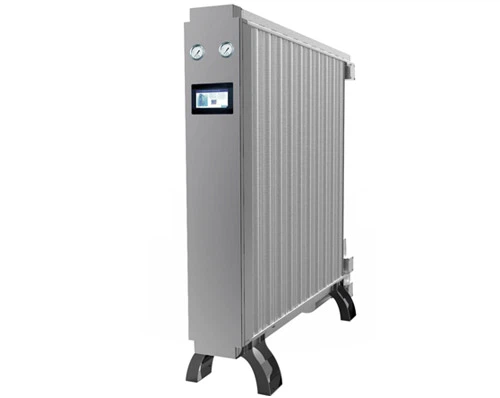

Most modern modular desiccant air dryers come with control systems that can be programmed to adjust the regeneration time based on these factors. Additionally, regular monitoring of the dryer's performance, including the dew point of the outlet air and the energy consumption, can help in fine - tuning the regeneration time.
Conclusion
In conclusion, the regeneration time has a profound impact on the performance of a modular desiccant air dryer. It affects the moisture removal efficiency, desiccant lifespan, and energy consumption of the dryer. As a supplier of modular desiccant air dryers, we understand the importance of finding the optimal regeneration time for our customers. By providing high - quality dryers with advanced control systems and offering technical support, we can help our customers achieve the best performance from their dryers while minimizing operating costs.
If you are in the market for a modular desiccant air dryer or need assistance in optimizing the performance of your existing dryer, we invite you to contact us for a consultation. Our team of experts is ready to help you find the best solution for your specific needs.
References
- [1] Smith, J. (2018). Compressed Air Systems: Principles and Applications. Elsevier.
- [2] Jones, A. (2020). Desiccant Air Dryers: Design and Operation. Wiley.
- [3] Brown, R. (2019). Energy - Efficient Compressed Air Systems. Springer.