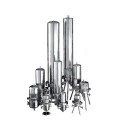
As a leading supplier of air pre - coolers, I'm often asked about the main components that make up these essential devices. Air pre - coolers play a crucial role in various industrial and commercial applications, from compressed air systems to refrigeration and HVAC setups. In this blog post, I'll delve into the key components of an air pre - cooler and explain how they work together to achieve efficient cooling.
Heat Exchanger
The heat exchanger is perhaps the most vital component of an air pre - cooler. Its primary function is to transfer heat from the hot air being cooled to a cooler medium, typically water or another refrigerant. There are several types of heat exchangers used in air pre - coolers, including shell - and - tube, plate - fin, and tube - fin heat exchangers.
Shell - and - Tube Heat Exchangers
Shell - and - tube heat exchangers consist of a series of tubes enclosed within a shell. The hot air flows through the tubes, while the cooling medium circulates around the tubes in the shell. This design allows for a large surface area for heat transfer, making it efficient for high - flow applications. The tubes can be made of various materials such as copper, stainless steel, or aluminum, depending on the specific requirements of the application, including factors like corrosion resistance and thermal conductivity.
Plate - Fin Heat Exchangers
Plate - fin heat exchangers are composed of multiple thin plates with fins attached to them. The hot air and the cooling medium flow through alternate channels formed by the plates. This design provides a high surface - to - volume ratio, which enhances heat transfer efficiency. Plate - fin heat exchangers are commonly used in applications where space is limited due to their compact size. They are also lightweight, making them suitable for mobile or portable air pre - cooler units.
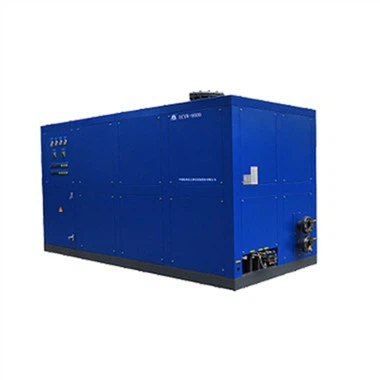

Tube - Fin Heat Exchangers
Tube - fin heat exchangers are similar to shell - and - tube heat exchangers but have fins attached to the outside of the tubes. These fins increase the surface area available for heat transfer, improving the overall efficiency of the heat exchanger. Tube - fin heat exchangers are widely used in automotive and industrial air - cooling applications. They are relatively easy to manufacture and can be customized to meet different performance requirements.
Cooling Medium Circulation System
The cooling medium circulation system is responsible for transporting the cooling medium to and from the heat exchanger. This system typically includes a pump, pipes, and valves.
Pump
The pump is the heart of the cooling medium circulation system. It creates the necessary pressure to move the cooling medium through the system. There are different types of pumps used in air pre - coolers, such as centrifugal pumps and positive displacement pumps. Centrifugal pumps are commonly used due to their simplicity, reliability, and ability to handle large volumes of fluid. They work by using a rotating impeller to increase the velocity of the fluid, which is then converted into pressure as the fluid exits the pump.
Pipes
Pipes are used to connect the various components of the cooling medium circulation system. They must be made of materials that are resistant to corrosion and can withstand the pressure and temperature of the cooling medium. Common pipe materials include copper, PVC, and stainless steel. The size and layout of the pipes are designed to ensure efficient flow of the cooling medium with minimal pressure drop.
Valves
Valves are used to control the flow of the cooling medium in the system. They can be used to regulate the flow rate, isolate different parts of the system for maintenance, or prevent backflow. There are various types of valves, such as ball valves, gate valves, and check valves. Ball valves are popular due to their quick - acting operation and ability to provide a tight seal.
Fan or Blower
In many air pre - coolers, a fan or blower is used to force the hot air through the heat exchanger. This helps to increase the rate of heat transfer by ensuring a continuous flow of air over the heat - exchange surface.
Axial Fans
Axial fans are the most common type of fans used in air pre - coolers. They work by drawing air in parallel to the axis of the fan blades and then discharging it in the same direction. Axial fans are relatively inexpensive, energy - efficient, and can provide a high volume of air flow. They are suitable for applications where a large amount of air needs to be moved at relatively low pressure.
Centrifugal Blowers
Centrifugal blowers, on the other hand, draw air in radially and discharge it at a right angle to the axis of the impeller. They can generate higher pressures compared to axial fans, making them suitable for applications where the air needs to be forced through a more restrictive heat exchanger or duct system. Centrifugal blowers are often used in industrial air pre - coolers where the air flow path may be more complex.
Control System
The control system of an air pre - cooler is responsible for monitoring and regulating the operation of the various components. It ensures that the air pre - cooler operates efficiently and safely.
Temperature Sensors
Temperature sensors are used to measure the temperature of the hot air entering and leaving the heat exchanger, as well as the temperature of the cooling medium. This information is used by the control system to adjust the operation of the fan, pump, or other components to maintain the desired temperature. For example, if the temperature of the hot air is too high, the control system may increase the speed of the fan or the flow rate of the cooling medium.
Pressure Sensors
Pressure sensors are used to monitor the pressure of the cooling medium and the air in the system. They can detect any abnormal pressure changes, which may indicate a blockage or a malfunction in the system. If the pressure exceeds a certain limit, the control system can shut down the air pre - cooler to prevent damage.
Programmable Logic Controller (PLC)
A PLC is a type of computer - based control system that can be programmed to perform specific functions. It can receive input from the temperature and pressure sensors and send output signals to control the operation of the fan, pump, and valves. PLCs are highly flexible and can be customized to meet the specific requirements of different air pre - cooler applications.
Applications of Air Pre - Coolers
Air pre - coolers have a wide range of applications in different industries.
Compressed Air Systems
In compressed air systems, an air pre - cooler Pre-cooler for Compressed Air is used to cool the compressed air before it enters the dryer. This reduces the load on the dryer and improves its efficiency. By removing a significant amount of heat from the compressed air, the pre - cooler helps to condense the moisture in the air, which can then be removed more easily by the dryer.
Refrigeration and HVAC Systems
In refrigeration and HVAC systems, air pre - coolers can be used to cool the incoming air before it enters the main cooling coils. This can improve the overall efficiency of the system and reduce energy consumption. For example, in a large commercial building, an air pre - cooler can be installed at the air intake to pre - cool the outdoor air, which then requires less energy to be cooled to the desired indoor temperature.
Industrial Processes
In various industrial processes, such as chemical manufacturing and power generation, air pre - coolers are used to cool hot gases or air streams. They help to protect equipment from overheating and improve the quality of the end - product. For instance, in a chemical reactor, an air pre - cooler can be used to cool the exhaust gases before they are released into the environment or further processed.
Conclusion
The main components of an air pre - cooler - the heat exchanger, cooling medium circulation system, fan or blower, and control system - all work together in a coordinated manner to achieve efficient cooling. Each component plays a crucial role in ensuring that the air pre - cooler operates effectively and meets the specific requirements of different applications.
If you are in need of an air pre - cooler for your industrial or commercial application, whether it's a Pre-cooler for Compressed Air, Swamp Cooler Precooler, or Condenser Pre Cooler, we are here to assist you. Our team of experts can help you select the right air pre - cooler and customize it to fit your needs. Contact us today to start the procurement and negotiation process, and let us work together to find the best cooling solution for your project.
References
- Incropera, F. P., DeWitt, D. P., Bergman, T. L., & Lavine, A. S. (2007). Fundamentals of Heat and Mass Transfer. Wiley.
- Stoecker, W. F., & Jones, J. W. (1982). Refrigeration and Air Conditioning. McGraw - Hill.
- ASHRAE Handbook. (Various editions). American Society of Heating, Refrigerating and Air - Conditioning Engineers.