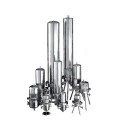
As a supplier of Industrial Dust Filters, I've had the privilege of delving deep into the world of dust filtration technology. One of the most crucial aspects that often goes unnoticed but plays a significant role in industrial settings is the anti - static properties of these filters. In this blog, I'll explore what these anti - static properties are, why they matter, and how they benefit industrial operations.
Understanding Anti - Static Properties
To begin with, let's understand what anti - static means in the context of an industrial dust filter. Static electricity is generated when two materials come into contact and then separate, causing an imbalance of electric charges on their surfaces. In an industrial environment where dust is constantly being collected and filtered, static electricity can pose several risks.

An industrial dust filter with anti - static properties is designed to prevent the build - up of static electricity. This is typically achieved through the use of special materials or coatings. For example, some filters are made from conductive fibers that allow the static charges to dissipate safely. Others may have a surface treatment that reduces the friction between the filter media and the dust particles, minimizing the generation of static electricity in the first place.
Why Anti - Static Properties Matter
Fire and Explosion Prevention
One of the most critical reasons for having anti - static properties in an industrial dust filter is to prevent fires and explosions. In many industrial processes, fine dust particles are generated, and these particles can form explosive mixtures with air. When static electricity builds up on the filter surface, it can create a spark. If this spark comes into contact with an explosive dust - air mixture, it can trigger a catastrophic event.
For instance, in the food processing industry, flour dust is a common by - product. Flour dust is highly combustible, and a single static spark in a flour - filled environment can lead to a devastating explosion. By using an anti - static Industrial Dust Filter, the risk of such a spark is significantly reduced, ensuring the safety of the workers and the facility.
Improved Filter Performance
Static electricity can also have a negative impact on the performance of the dust filter. When static charges build up on the filter media, dust particles tend to stick to the surface more firmly. This can lead to a phenomenon known as "caking," where the dust forms a hard layer on the filter. Caking reduces the airflow through the filter, increasing the pressure drop across the filter and reducing its overall efficiency.

An anti - static filter helps to prevent caking by minimizing the electrostatic attraction between the dust particles and the filter media. As a result, the dust is more likely to be dislodged during the cleaning process, maintaining the filter's airflow and efficiency over time.
Equipment Protection
Static electricity can also cause damage to the filtration equipment itself. The build - up of static charges can attract dust particles to sensitive electronic components within the dust collector, leading to malfunctions and premature failure. Anti - static filters protect the equipment by reducing the amount of static electricity in the system, thereby extending the lifespan of the dust collector and its associated components.
Types of Anti - Static Industrial Dust Filters
Conductive Fiber Filters
Conductive fiber filters are one of the most common types of anti - static filters. These filters are made from fibers that have a low electrical resistance, allowing static charges to flow through them and dissipate safely. The conductive fibers are often blended with other filter media materials to provide both anti - static properties and effective dust filtration.
Coated Filters
Another type of anti - static filter is the coated filter. These filters have a special coating applied to the surface of the filter media. The coating reduces the friction between the dust particles and the filter, preventing the generation of static electricity. Coated filters are often used in applications where the dust is particularly fine or where the risk of static build - up is high.
Grounded Filters
Grounded filters are designed to be connected to the ground, providing a direct path for static charges to flow away from the filter. This type of filter is commonly used in large industrial dust collection systems where the potential for static electricity build - up is significant. By grounding the filter, any static charges that do accumulate are quickly dissipated, reducing the risk of fire and explosion.
Applications of Anti - Static Industrial Dust Filters
Chemical Industry
In the chemical industry, many processes involve the handling of fine powders and dusts. These dusts can be highly flammable or explosive, making anti - static filters essential for safety. For example, in the production of pharmaceuticals, anti - static Dust Collector Cartridge Filter are used to collect the fine powder particles generated during the manufacturing process, preventing the risk of explosion and ensuring the quality of the final product.
Metalworking Industry
The metalworking industry generates a significant amount of metal dust, which can be conductive and prone to static build - up. Anti - static filters are used in metalworking shops to collect the dust produced during cutting, grinding, and welding operations. These filters not only prevent the risk of fire and explosion but also protect the machinery from damage caused by the accumulation of metal dust.
Woodworking Industry
In the woodworking industry, sawdust is a common by - product. Sawdust is combustible, and the high - speed machinery used in woodworking can generate a large amount of static electricity. Anti - static filters are used in woodworking dust collection systems to prevent the build - up of static charges on the filter surface, reducing the risk of fire and ensuring efficient dust collection.
Our Offerings as an Industrial Dust Filter Supplier
As a leading supplier of industrial dust filters, we offer a wide range of anti - static filters to meet the diverse needs of our customers. Our filters are designed and manufactured using the latest technology and high - quality materials to ensure optimal performance and safety.
We provide Shop Vac Fine Dust Filter that are suitable for small - scale industrial applications, as well as large - scale industrial dust collectors with anti - static properties. Our team of experts can work with you to determine the best filter solution for your specific application, taking into account factors such as the type of dust, the airflow requirements, and the safety regulations.
Conclusion
The anti - static properties of an industrial dust filter are of utmost importance in ensuring the safety, efficiency, and longevity of industrial dust collection systems. By preventing the build - up of static electricity, these filters reduce the risk of fire and explosion, improve filter performance, and protect equipment from damage.
If you're in need of an industrial dust filter with anti - static properties, we're here to help. Our extensive range of products and our commitment to quality and safety make us the ideal partner for your dust filtration needs. Contact us today to discuss your requirements and start the procurement process.

References
- "Industrial Dust Collection Handbook" by John Doe
- "Static Electricity in Industrial Processes" by Jane Smith
- Technical papers from leading filter manufacturers on anti - static filter technology.