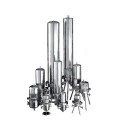
Hey there! As a supplier of oil water separators, I've seen firsthand how crucial these devices are in chemical plants. In this blog, I'll share some key considerations for using an oil water separator in such industrial settings.
1. Type of Chemicals Handled
First off, you've got to think about the types of chemicals your plant deals with. Different chemicals have different properties, like density, viscosity, and solubility. For example, some chemicals might be highly viscous, which can make it harder for the oil water separator to separate the oil from the water.
If your plant processes heavy hydrocarbons, you'll need a separator that can handle that kind of thick, sticky stuff. On the other hand, if you're dealing with more volatile organic compounds (VOCs), the separator needs to be designed to prevent the escape of these harmful gases.
We offer a range of separators, including the Compressed Air Oil Water Separator, which is great for handling air that has been contaminated with oil and water during the compression process in chemical plants. This type of separator is designed to efficiently remove oil droplets from compressed air, ensuring that your air quality meets the necessary standards.
2. Flow Rate
The flow rate of the wastewater in your chemical plant is another important factor. You need to know how much water and oil mixture is flowing through the system per unit of time. If the flow rate is too high for the separator's capacity, it won't be able to separate the oil and water effectively.
Imagine trying to pour a gallon of water through a straw in a second – it just won't work. Similarly, if the separator is overwhelmed with a high flow rate, the oil and water won't have enough time to separate properly.
To determine the right flow rate for your separator, you need to analyze your plant's production processes and estimate the volume of wastewater generated. We can help you calculate this and recommend the appropriate separator based on your specific flow rate requirements. Our Oil Water Separator Filter is designed to handle a variety of flow rates, ensuring efficient separation regardless of the volume of wastewater.
3. Oil Content
The amount of oil in the wastewater is also a major consideration. Some chemical processes produce wastewater with a high oil content, while others have only a small amount of oil. If the oil content is very high, you might need a more advanced separator with a higher separation efficiency.
For instance, if your plant has a process that involves a lot of oil-based solvents, the wastewater will likely have a significant amount of oil. In this case, a simple separator might not be enough. You'll need a separator that can handle the high oil load and remove as much oil as possible.
Our Screw Compressor Oil Separator is ideal for applications where the oil content is relatively high. It uses a screw compressor to separate the oil from the water, providing a more efficient and effective separation process.
4. Environmental Regulations
Compliance with environmental regulations is a must in the chemical industry. Different regions have different rules regarding the discharge of oil-contaminated water. You need to make sure that the oil water separator you choose can help you meet these regulations.
For example, some areas have strict limits on the amount of oil that can be present in the discharged water. If your separator can't achieve these low oil levels, you could face fines and other penalties.
We stay up-to-date with the latest environmental regulations and can recommend separators that are designed to meet or exceed these standards. Our team can also provide you with the necessary documentation and support to ensure that you're in compliance with all relevant regulations.
5. Maintenance and Operation
Maintenance and operation are important aspects of using an oil water separator. You want a separator that is easy to maintain and operate. A complicated separator can lead to higher maintenance costs and more downtime.
Look for a separator that has simple controls and easy access to the internal components. This will make it easier for your staff to perform routine maintenance tasks, such as cleaning and replacing filters.
We offer comprehensive maintenance and support services for all our separators. Our technicians can provide training to your staff on how to operate and maintain the separator properly, ensuring that it runs smoothly and efficiently for years to come.
6. Space Requirements
Space is often a limited resource in chemical plants. You need to consider the physical size of the oil water separator and make sure it can fit into the available space.
Some separators are compact and can be easily installed in a small area, while others are larger and require more space. You also need to think about the installation requirements, such as the need for a level surface and proper ventilation.
We can help you choose a separator that is the right size for your plant and provide you with detailed installation instructions. Our team can also assist with the installation process to ensure that the separator is installed correctly and safely.
7. Cost
Of course, cost is always a factor. You need to balance the initial purchase cost of the separator with its long-term operating costs. A cheaper separator might seem like a good deal at first, but it could end up costing you more in the long run if it has high maintenance costs or low efficiency.
When considering the cost, also think about the potential savings from reducing your environmental impact and avoiding fines for non-compliance. A high-quality separator can pay for itself over time by helping you save on operating costs and improving your overall efficiency.
We offer a range of oil water separators at different price points to meet your budget. Our team can work with you to find the best solution that offers the right balance between cost and performance.
In conclusion, choosing the right oil water separator for your chemical plant requires careful consideration of several factors. By taking into account the type of chemicals, flow rate, oil content, environmental regulations, maintenance and operation, space requirements, and cost, you can make an informed decision that will benefit your plant in the long run.
If you're interested in learning more about our oil water separators or have any questions, please don't hesitate to reach out. We're here to help you find the perfect solution for your chemical plant's needs. Let's start a conversation about how we can work together to improve your wastewater management and ensure a more sustainable future.


References
- Environmental Protection Agency (EPA) guidelines on industrial wastewater treatment.
- Industry standards and best practices for oil water separation in chemical plants.