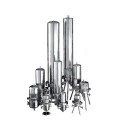
Hey there! As a supplier of Heatless Desiccant Air Dryers, I often get asked about the thermal insulation requirements for these nifty machines. So, let's dive right in and break it down.
First off, what's a heatless desiccant air dryer? Well, it's a key piece of equipment in many industrial settings. Its main job is to remove moisture from compressed air. Compressed air can carry a lot of water vapor, and if that moisture isn't removed, it can cause all sorts of problems. It can damage pneumatic tools, corrode pipes, and even mess up the quality of products in manufacturing processes.
Now, let's talk about thermal insulation. Why do heatless desiccant air dryers need it? The answer lies in energy efficiency and performance stability.
Energy Efficiency
Insulation helps to reduce heat loss. In a heatless desiccant air dryer, the desiccant material adsorbs moisture from the compressed air. During the regeneration process, a small portion of the dried air is used to remove the moisture from the desiccant. If the dryer isn't properly insulated, heat can escape. This means that more energy is needed to maintain the right temperature and pressure conditions for the adsorption and regeneration processes.
Think of it like a thermos flask. If you have a poorly insulated thermos, your hot coffee will cool down quickly. Similarly, a heatless desiccant air dryer without proper insulation will lose heat, and you'll end up using more energy to keep it running effectively.
Performance Stability
Thermal insulation also plays a crucial role in maintaining the stability of the dryer's performance. Temperature fluctuations can affect the adsorption capacity of the desiccant. If the temperature drops too low, the desiccant may not be able to adsorb moisture as efficiently. On the other hand, if the temperature gets too high, it can lead to premature desiccant degradation.
By insulating the dryer, we can create a more stable internal environment. This ensures that the desiccant operates within its optimal temperature range, resulting in consistent and reliable moisture removal.
What are the insulation requirements?
The insulation requirements for a heatless desiccant air dryer depend on several factors, including the size of the dryer, the operating environment, and the specific application.
Insulation Material
There are various insulation materials available on the market. Some common ones include fiberglass, mineral wool, and polyurethane foam. Fiberglass is a popular choice because it's relatively inexpensive and has good thermal insulation properties. Mineral wool is also a great option, as it's fire-resistant and has excellent sound - absorbing capabilities. Polyurethane foam, on the other hand, offers high - density insulation and can be easily molded to fit the shape of the dryer.
Insulation Thickness
The thickness of the insulation is another important consideration. Generally, a thicker insulation layer provides better thermal protection. However, it's also important to balance the thickness with practicality. For small - to medium - sized heatless desiccant air dryers, an insulation thickness of around 25 - 50 mm is often sufficient. Larger dryers or those operating in extremely cold environments may require thicker insulation, up to 100 mm or more.
Sealing
Proper sealing is just as important as the insulation material and thickness. Any gaps or cracks in the insulation can allow heat to escape. Make sure that all joints, seams, and access points are well - sealed. This can be done using sealing tapes, gaskets, or sealants.
Our Product Offerings
As a supplier of Heatless Desiccant Air Dryers, we understand the importance of thermal insulation. That's why our dryers are designed with high - quality insulation materials and proper sealing techniques.
We offer a range of products, including Low Dew Point Desiccant Air Dryers. These dryers are capable of achieving extremely low dew points, making them ideal for applications where moisture control is critical.
Our Heated Clothes Airer Desiccant Compressed Air Dryer is another great option. It combines the benefits of desiccant drying with a unique heating mechanism, providing efficient and reliable moisture removal.
And if you're looking for a dryer with a combination of features, check out our Desiccant Air DryerHot Air Dryer HeatedClothes Airer. It offers a versatile solution for a wide range of industrial applications.
Why Choose Us?
When you choose our heatless desiccant air dryers, you're not just getting a product. You're getting a commitment to quality, performance, and energy efficiency. Our dryers are built to last, with durable construction and high - quality components.
We also provide excellent customer support. Our team of experts is always on hand to answer your questions, offer technical advice, and help you choose the right dryer for your specific needs.
Let's Talk
If you're in the market for a heatless desiccant air dryer, we'd love to hear from you. Whether you're looking for more information about thermal insulation requirements or want to discuss your specific application, we're here to help. Contact us today to start the conversation and take the first step towards finding the perfect dryer for your business.


References
- ASHRAE Handbook of HVAC Systems and Equipment
- Compressed Air and Gas Handbook
- Industrial Drying Technology: Principles, Equipment, and New Developments