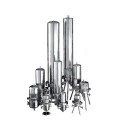
An air filter is an essential component in various systems, from the HVAC (Heating, Ventilation, and Air Conditioning) units in our homes and offices to the engines of our vehicles. As an air filter supplier, I've witnessed firsthand the importance of understanding how these devices work. This knowledge not only helps consumers make informed decisions but also ensures the proper maintenance and efficient operation of air filters.
The Basic Principle of Air Filtration
At its core, the function of an air filter is to remove contaminants from the air. These contaminants can range from large particles like dust and pollen to microscopic pollutants such as bacteria and viruses. The basic principle behind air filtration is simple: as air passes through the filter, the contaminants get trapped, allowing only clean air to pass through.


There are several mechanisms by which air filters capture particles. One of the most common is mechanical filtration. In this process, the filter material acts as a physical barrier. The fibers in the filter are arranged in a way that creates a maze-like structure. When air flows through this structure, larger particles collide with the fibers and get stuck. The size of the gaps between the fibers determines the filter's ability to capture particles of different sizes. For example, a filter with very fine fibers will be able to trap smaller particles, while a filter with larger gaps may only capture larger debris.
Another important mechanism is electrostatic attraction. Some air filters are designed to have an electrostatic charge. This charge attracts particles in the air, similar to how a magnet attracts metal objects. Particles that pass near the charged fibers are pulled towards them and become trapped. Electrostatic filters are particularly effective at capturing small particles that may not be easily caught by mechanical filtration alone.
Types of Air Filters and Their Working Mechanisms
1. Fiberglass Filters
Fiberglass filters are one of the most common types of air filters, especially in residential HVAC systems. They are made of thin fiberglass strands that are randomly arranged. These filters work primarily through mechanical filtration. The random arrangement of the fibers creates a series of small openings that allow air to pass through while capturing larger particles like dust and lint. However, fiberglass filters are generally less effective at capturing smaller particles. They are often considered a basic level of filtration and are relatively inexpensive.
2. Pleated Filters
Pleated filters are an upgrade from fiberglass filters. They are made of a pleated material, usually synthetic fibers, which increases the surface area of the filter. The larger surface area allows for more efficient filtration. Similar to fiberglass filters, pleated filters use mechanical filtration to trap particles. However, the pleated design also provides more opportunities for particles to collide with the filter material. This makes them more effective at capturing a wider range of particle sizes, including smaller dust and pollen particles. Pleated filters are commonly used in both residential and commercial HVAC systems.
3. HEPA Filters
HEPA (High-Efficiency Particulate Air) filters are known for their high level of filtration efficiency. These filters are designed to capture at least 99.97% of particles that are 0.3 microns in diameter or larger. HEPA filters work through a combination of mechanical filtration and diffusion. Diffusion is the process by which very small particles move randomly in the air due to Brownian motion. As these small particles move through the filter, they are more likely to come into contact with the filter fibers and get trapped. HEPA filters are used in applications where high-quality air filtration is required, such as in hospitals, clean rooms, and some high-end air purifiers.
4. Activated Carbon Filters
Activated carbon filters are primarily used to remove odors, gases, and volatile organic compounds (VOCs) from the air. The activated carbon has a large surface area with many tiny pores. These pores adsorb (not absorb) the odor-causing molecules and gases. When air passes through the activated carbon filter, the molecules in the air stick to the surface of the carbon. Activated carbon filters are often used in combination with other types of filters, such as HEPA filters, to provide comprehensive air purification. For example, in an Air Purifier Air Vent Shutter, an activated carbon filter can work alongside a HEPA filter to remove both particles and odors from the air.
Applications of Air Filters
HVAC Systems
In HVAC systems, air filters play a crucial role in maintaining indoor air quality. They remove dust, pollen, and other contaminants from the air, preventing them from circulating throughout the building. This not only improves the health and comfort of the occupants but also helps to protect the HVAC equipment. By removing particles from the air, the filters prevent the build-up of debris in the ducts and on the heating and cooling coils, which can reduce the efficiency of the system. Regularly changing the air filters in an HVAC system is essential for optimal performance.
Automotive Engines
Air filters are also vital in automotive engines. They ensure that the air entering the engine is clean, free from dust and debris. This is important because any contaminants in the air can cause damage to the engine components, such as the pistons and cylinders. A dirty air filter can restrict the airflow to the engine, which can lead to reduced power, lower fuel efficiency, and increased emissions. Automotive air filters typically use a combination of mechanical and electrostatic filtration to capture particles.
Industrial Applications
In industrial settings, air filters are used in a wide range of applications. For example, in manufacturing plants, air filters are used to remove pollutants from the air to protect the health of the workers and to prevent damage to the equipment. In the food and beverage industry, air filters are used to maintain a clean and sterile environment to prevent contamination of the products. Some industrial air filters are designed to handle high volumes of air and are capable of capturing very fine particles, such as those produced in welding or chemical processes. Compressed Air Filter Paper Air Freshener is an example of a product that can be used in industrial settings to filter compressed air and add a fresh scent to the environment.
Maintenance and Replacement of Air Filters
Proper maintenance and replacement of air filters are essential for their effective operation. Over time, air filters become clogged with particles, which reduces their efficiency and can even restrict the airflow. This can lead to increased energy consumption and decreased performance of the system.
The frequency of filter replacement depends on several factors, such as the type of filter, the level of air pollution in the environment, and the usage of the system. For example, in a residential HVAC system with a basic fiberglass filter, the filter may need to be replaced every 1-3 months. Pleated filters can typically last 3-6 months, while HEPA filters may last 1-2 years, depending on the conditions.
When replacing an air filter, it's important to choose the right size and type of filter for the system. Using the wrong filter can lead to poor filtration and may even damage the equipment. It's also a good idea to follow the manufacturer's recommendations for filter replacement.
The Role of Air Filter Regulators
Air filter regulators are an important component in some air filtration systems. They are used to control the pressure and flow of air through the filter. By regulating the air pressure, the filter regulator ensures that the air flows through the filter at an optimal rate. This helps to maintain the efficiency of the filtration process and prevents damage to the filter. Air Filter Regulator Air Filter Regulator is a product that can be used to precisely control the air pressure and flow in an air filtration system.
Conclusion
Understanding how an air filter works is crucial for anyone who uses or maintains air filtration systems. Whether it's in a home, a vehicle, or an industrial setting, air filters play a vital role in protecting our health and the performance of our equipment. As an air filter supplier, I am committed to providing high-quality air filters and related products to meet the diverse needs of our customers. If you are in need of air filters or have any questions about air filtration, please feel free to contact us for a procurement discussion. We are here to help you find the best solutions for your air filtration requirements.
References
- "Fundamentals of Air Filtration" by the American Filtration & Separations Society.
- "HVAC Systems Design Handbook" by Ashrae.
- "Automotive Engine Air Filtration: Principles and Applications" by SAE International.