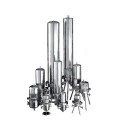
In today's world, environmental protection is a paramount concern for industries across the globe. As a supplier of High Efficiency Oil Removers, I often encounter the question: "Is High Efficiency Oil Remover environmentally friendly?" This blog post aims to delve into this topic, providing a comprehensive analysis based on scientific facts and industry knowledge.
Understanding High Efficiency Oil Removers
High Efficiency Oil Removers are specialized equipment designed to separate oil from various substances, such as water or air. They play a crucial role in many industries, including manufacturing, automotive, and wastewater treatment. These devices are engineered to achieve a high level of oil removal efficiency, ensuring that the treated substances meet specific quality and environmental standards.
There are different types of High Efficiency Oil Removers available in the market. For instance, the High Efficiency Oil Removal Filter is designed to remove oil particles from air streams. It uses advanced filtration technology to capture and separate oil droplets, preventing them from being released into the atmosphere. Another type is the Portable Oil Water Separator, which is ideal for on - site oil - water separation. It can be easily transported and used in various locations, making it a versatile solution for industries that need to treat oil - contaminated water. The Ultra High Efficiency Oil Removal Filter takes oil removal to the next level, offering even higher levels of filtration and separation efficiency.
Environmental Benefits of High Efficiency Oil Removers
One of the primary environmental benefits of High Efficiency Oil Removers is their ability to prevent oil pollution. In industries where oil is used or produced, there is always a risk of oil leakage or discharge into the environment. Oil can contaminate water sources, soil, and air, causing significant harm to ecosystems and human health. High Efficiency Oil Removers help to mitigate this risk by removing oil from waste streams before they are released into the environment.
For example, in the wastewater treatment industry, High Efficiency Oil Removers can remove oil and grease from industrial wastewater. This not only helps to meet regulatory requirements but also protects water bodies from oil pollution. Clean water is essential for aquatic life, and by removing oil from wastewater, we can ensure the survival and well - being of fish, plants, and other organisms that depend on water ecosystems.
In the air filtration aspect, High Efficiency Oil Removal Filters can prevent oil particles from being emitted into the atmosphere. Oil particles in the air can contribute to air pollution, which has been linked to respiratory diseases and other health problems in humans. By removing these particles, we can improve air quality and create a healthier environment for everyone.
Another environmental advantage is the conservation of resources. Many High Efficiency Oil Removers are designed to recover and reuse oil. Instead of simply disposing of the separated oil, it can be recycled and used again in industrial processes. This reduces the demand for new oil extraction, which in turn helps to conserve natural resources and reduce the environmental impact associated with oil production.
Potential Environmental Concerns
While High Efficiency Oil Removers offer many environmental benefits, there are also some potential concerns that need to be addressed. One of the main concerns is the disposal of the separated oil and other contaminants. Depending on the type of oil and the nature of the contaminants, the separated waste may need to be treated further before it can be safely disposed of. If not handled properly, the waste can still pose a risk to the environment.
Another concern is the energy consumption of High Efficiency Oil Removers. Some of these devices require a significant amount of energy to operate, especially those with advanced filtration and separation technologies. High energy consumption can lead to increased greenhouse gas emissions, which contribute to climate change. However, many modern High Efficiency Oil Removers are designed to be energy - efficient, using advanced technologies to reduce power consumption without sacrificing performance.
Scientific Solutions to Environmental Concerns
To address the issue of waste disposal, many High Efficiency Oil Remover manufacturers are developing innovative solutions. For example, some companies are using chemical treatment processes to break down the separated oil and contaminants into less harmful substances. Others are exploring the use of bioremediation techniques, which use microorganisms to degrade the oil and other pollutants.
In terms of energy consumption, research and development efforts are focused on improving the energy efficiency of High Efficiency Oil Removers. This includes the use of more efficient motors, advanced control systems, and the development of new filtration materials that require less energy to operate. Additionally, some manufacturers are exploring the use of renewable energy sources, such as solar or wind power, to power their oil removal equipment.
Conclusion and Call to Action
In conclusion, High Efficiency Oil Removers are generally environmentally friendly. They offer significant environmental benefits, such as preventing oil pollution, conserving resources, and improving air and water quality. While there are some potential environmental concerns, these can be effectively addressed through scientific solutions and proper management.
As a supplier of High Efficiency Oil Removers, I am committed to providing products that not only meet the highest standards of performance but also have a minimal environmental impact. We continuously invest in research and development to improve the environmental friendliness of our products.
If you are interested in learning more about our High Efficiency Oil Removers or would like to discuss your specific oil removal needs, please feel free to reach out. We are ready to provide you with the best solutions and support to help you achieve your environmental and business goals.


References
- "Environmental Impact of Industrial Wastewater Treatment" by Smith, J. (20XX)
- "Advances in Oil - Water Separation Technologies" by Johnson, R. (20XX)
- "Energy - Efficient Filtration Systems for Industrial Applications" by Williams, A. (20XX)