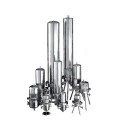
Hey there! As a supplier of sterilizing air filters, I often get asked about the filtration accuracy of these crucial devices. So, let's dive right in and break it down.
First off, what exactly is filtration accuracy? Well, it's basically how well a filter can remove specific particles from the air. In the case of sterilizing air filters, we're talking about getting rid of microorganisms like bacteria, viruses, and fungi. These filters are used in all sorts of settings where maintaining a sterile environment is a must, such as hospitals, pharmaceutical manufacturing plants, and food processing facilities.
The filtration accuracy of a sterilizing air filter is typically measured in terms of the size of the particles it can trap. The most common unit of measurement is the micron (μm), which is one-millionth of a meter. For example, a filter with a filtration accuracy of 0.2 microns can trap particles that are 0.2 microns or larger in size.
Now, why is 0.2 microns such a big deal? Well, it turns out that most bacteria and fungi are larger than 0.2 microns, so a filter with this level of accuracy can effectively remove them from the air. Viruses, on the other hand, are much smaller, usually ranging from 0.02 to 0.3 microns. While a 0.2-micron filter can't completely eliminate viruses, it can still reduce their concentration in the air, which helps to minimize the risk of infection.
But it's not just about the size of the particles. The efficiency of a filter also plays a crucial role in its filtration accuracy. Efficiency refers to the percentage of particles that a filter can remove from the air. For example, a filter with an efficiency of 99.99% can remove 99.99% of the particles of a specific size from the air.
There are different standards and ratings for filter efficiency, such as the High-Efficiency Particulate Air (HEPA) standard. HEPA filters are designed to remove at least 99.97% of particles that are 0.3 microns in size. These filters are widely used in applications where high levels of air cleanliness are required, including operating rooms and cleanrooms.

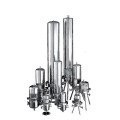
When it comes to sterilizing air filters, there are also specialized filters that are designed to meet even higher standards. For instance, Aseptic Filter are engineered to provide a high level of microbial retention, ensuring that the air in a given space remains free from contaminants. These filters are often used in critical environments where the risk of microbial contamination is extremely low.
Another type of filter is the Filter Used for Sterilization. These filters are specifically designed to be used in sterilization processes, such as steam sterilization or gamma irradiation. They are made from materials that can withstand the harsh conditions of these processes while still maintaining their filtration efficiency.
And then there are Sterilization Grade Filter, which are the gold standard when it comes to air sterilization. These filters are rigorously tested to ensure that they can remove a high percentage of microorganisms, including bacteria, viruses, and fungi. They are commonly used in pharmaceutical manufacturing, biotechnology, and other industries where strict sterility requirements must be met.
So, how do these filters achieve such high levels of filtration accuracy? It all comes down to the filter media and the design of the filter. The filter media is the material that actually traps the particles, and it can be made from a variety of substances, such as fiberglass, polyester, or cellulose. Different materials have different properties, which can affect the filter's efficiency and durability.
The design of the filter also plays a role in its performance. For example, pleated filters have a larger surface area than flat filters, which allows them to capture more particles. Additionally, some filters are designed with multiple layers of media, each with a different pore size, to provide a more comprehensive filtration process.
In addition to the filter media and design, proper installation and maintenance are also essential for ensuring the filtration accuracy of a sterilizing air filter. If a filter is not installed correctly, it can allow air to bypass the filter, reducing its effectiveness. Regular maintenance, such as replacing the filter at the recommended intervals, is also important to prevent the buildup of particles and maintain the filter's efficiency.
So, there you have it! That's a basic overview of the filtration accuracy of sterilizing air filters. If you're in the market for a sterilizing air filter, it's important to choose a filter that meets your specific needs and requirements. Consider factors such as the size of the particles you need to remove, the efficiency of the filter, and the environment in which the filter will be used.
If you have any questions or need more information about our sterilizing air filters, please don't hesitate to get in touch. We're here to help you find the right filter for your application and ensure that you get the best possible performance. Contact us today to start the conversation and let's work together to create a cleaner, safer environment.
References
- Manufacturers' specifications and technical data sheets for sterilizing air filters.
- Industry standards and guidelines for air filtration in sterile environments.
- Research articles on air filtration and microbial removal.