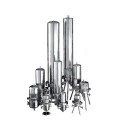
In the realm of industrial operations, maintaining a clean and safe working environment is of paramount importance. One crucial component in achieving this goal is the industrial dust filter. These filters play a vital role in removing harmful dust particles from the air, protecting both workers and equipment. However, the effectiveness of an industrial dust filter is greatly enhanced by the presence of a control system. In this blog post, we'll explore the role of a control system in an industrial dust filter, and as a trusted industrial dust filter supplier, we'll shed light on how these components work together to optimize performance.
Understanding Industrial Dust Filters
Before delving into the role of the control system, it's essential to have a basic understanding of industrial dust filters. Industrial dust filters are designed to capture and remove dust and other particulate matter from industrial processes. They are used in a wide range of industries, including manufacturing, mining, woodworking, and pharmaceuticals. There are several types of industrial dust filters, each with its own unique features and applications. For example, the Shop Vac Fine Dust Filter is ideal for small-scale applications, while the Dust Collector Cartridge Filter is commonly used in larger industrial settings. Our Industrial Dust Filter offers a comprehensive solution for various dust removal needs.
The Basics of a Control System
A control system in an industrial dust filter is a set of components and algorithms that work together to monitor, regulate, and optimize the filter's performance. It consists of sensors, controllers, and actuators. The sensors are responsible for collecting data about the filter's operation, such as the pressure drop across the filter, the flow rate of the air, and the concentration of dust particles in the air. The controllers analyze this data and make decisions based on pre - programmed algorithms. The actuators then carry out the commands issued by the controllers to adjust various parameters of the filter, such as the cleaning cycle, the fan speed, and the valve opening.
Monitoring and Data Collection
One of the primary roles of the control system is monitoring. The sensors installed in the industrial dust filter continuously collect data on different aspects of its operation. For instance, a pressure sensor can measure the pressure drop across the filter. As the filter accumulates dust over time, the pressure drop increases. By monitoring this pressure drop, the control system can determine when the filter needs to be cleaned or replaced. In addition to pressure, sensors can also measure the temperature, humidity, and dust concentration in the air. This data is crucial for ensuring the filter is operating within its optimal parameters. If the dust concentration is too high, it may indicate that the filter is not working effectively, and the control system can take appropriate action.


Regulation and Optimization
Based on the data collected by the sensors, the control system regulates the operation of the industrial dust filter. For example, it can adjust the cleaning cycle of the filter. When the pressure drop across the filter reaches a certain threshold, the control system can trigger the cleaning mechanism, which may involve back - pulsing, shaking, or sonic cleaning, depending on the type of filter. This ensures that the filter remains clean and efficient, preventing clogging and maintaining a high level of air filtration. The control system can also optimize the energy consumption of the filter. By adjusting the fan speed according to the actual air flow requirements, it can reduce the power consumption of the filter without sacrificing its performance. This not only saves energy but also reduces the operating costs of the industrial facility.
Ensuring Safety and Compliance
Industrial dust filters are often used in environments where there are strict safety and environmental regulations. The control system plays a crucial role in ensuring compliance with these regulations. By monitoring the dust concentration in the air, it can make sure that the emission levels are within the permitted limits. If the dust concentration exceeds the allowable threshold, the control system can issue an alarm and take corrective actions, such as adjusting the ventilation rate or increasing the cleaning frequency of the filter. Moreover, the control system can enhance the safety of the industrial dust filter itself. It can detect malfunctions in the filter components, such as a broken valve or a faulty fan. When such a malfunction is detected, the control system can shut down the filter immediately to prevent further damage and potential safety hazards.
Integration with Industrial Processes
In modern industrial settings, the control system of an industrial dust filter can be integrated with other industrial processes. This integration allows for better coordination and overall efficiency. For example, in a manufacturing plant, the dust filter control system can be connected to the production line control system. Based on the production rate, the control system can adjust the operation of the dust filter accordingly. If the production rate increases, the dust load is likely to increase, and the control system can ramp up the filter's performance to meet the higher demand. This seamless integration of systems not only improves the dust removal efficiency but also enhances the overall productivity of the industrial facility.
Maintenance and Troubleshooting
The control system also simplifies the maintenance and troubleshooting processes of the industrial dust filter. It can provide real - time status information about the filter, such as the remaining life of the filter media, the number of cleaning cycles completed, and the frequency of component failures. This information helps maintenance personnel to plan and carry out preventive maintenance tasks effectively. In case of a problem, the control system can generate detailed diagnostic reports, which can assist technicians in quickly identifying and resolving the issue. This reduces the downtime of the filter and ensures continuous operation of the industrial process.
As a Supplier: Our Commitment
As an industrial dust filter supplier, we understand the critical role that the control system plays in the performance of the filter. That's why we offer high - quality control systems that are designed to work seamlessly with our Industrial Dust Filter. Our control systems are equipped with advanced sensors and intelligent algorithms that can adapt to different operating conditions. We provide comprehensive technical support and training to our customers, ensuring that they can operate and maintain the control systems effectively.
Conclusion and Call to Action
In conclusion, the control system in an industrial dust filter is an indispensable component that enhances the filter's performance, efficiency, safety, and compliance. It monitors, regulates, and optimizes the operation of the filter, ensuring that it provides effective dust removal in industrial environments. If you're in need of an industrial dust filter and a reliable control system, we're here to help. Our team of experts can assist you in selecting the right products for your specific requirements. We invite you to reach out to us for more information and to start a procurement discussion. Let's work together to create a cleaner and safer industrial environment.
References
- Crowl, D. A., & Louvar, J. F. (2019). Chemical Process Safety: Fundamentals with Applications. Pearson.
- Green, D. W., & Perry, R. H. (2007). Perry's Chemical Engineers' Handbook. McGraw - Hill.
- Stack, R. G. (2018). Air Pollution Control Technology Handbook. Elsevier.