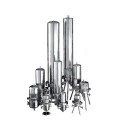
Hey there! I'm a supplier of Sterilization Grade Filters, and I often get asked if these filters can be used in the oil and gas industry. Well, let's dig into this topic and find out.
First off, let's understand what a Sterilization Grade Filter is. A Sterilization Grade Filter is designed to remove microorganisms and particles from a fluid or gas to achieve a high level of sterility. These filters are commonly used in industries like pharmaceuticals, biotechnology, and food and beverage, where maintaining a sterile environment is crucial.
Now, let's talk about the oil and gas industry. This industry has its own set of unique challenges and requirements. The oil and gas production process involves dealing with various types of fluids, such as crude oil, natural gas, and drilling fluids. These fluids can contain a wide range of contaminants, including solids, liquids, and gases.
One of the main concerns in the oil and gas industry is the presence of bacteria and other microorganisms. These microorganisms can cause a variety of problems, such as corrosion, fouling, and the production of harmful by-products. For example, sulfate-reducing bacteria (SRB) can produce hydrogen sulfide, which is a highly toxic gas that can corrode equipment and pose a safety hazard to workers.
So, can a Sterilization Grade Filter be used to address these issues? The answer is yes, but with some considerations.
Advantages of Using Sterilization Grade Filters in the Oil and Gas Industry
Microorganism Removal
Sterilization Grade Filters are highly effective at removing bacteria, fungi, and other microorganisms from fluids. By installing these filters in the oil and gas production process, operators can reduce the risk of microbial contamination and the associated problems. For instance, in water injection systems, where water is injected into oil reservoirs to enhance oil recovery, Sterilization Grade Filters can prevent the growth of bacteria in the injected water, which can help maintain the integrity of the reservoir and improve oil production.
Improved Product Quality
In the oil and gas industry, the quality of the final product is of utmost importance. Contaminants, including microorganisms, can affect the quality of crude oil and natural gas. By using Sterilization Grade Filters, operators can ensure that the products meet the required quality standards. For example, in the refining process, removing microorganisms from the feedstock can help prevent fouling of the refining equipment and improve the efficiency of the refining process.


Equipment Protection
Microbial contamination can lead to corrosion and fouling of equipment, which can increase maintenance costs and reduce the lifespan of the equipment. Sterilization Grade Filters can help protect equipment by removing the microorganisms that cause these problems. For example, in pipelines, where the flow of fluids can be affected by fouling, Sterilization Grade Filters can prevent the build-up of biofilms and other deposits, which can improve the flow efficiency and reduce the risk of pipeline blockages.
Challenges and Considerations
Compatibility with Fluids
The oil and gas industry deals with a wide range of fluids, each with its own unique properties. Before using a Sterilization Grade Filter, it's important to ensure that the filter is compatible with the fluid being filtered. Some fluids, such as crude oil, can contain high levels of hydrocarbons and other chemicals that can damage the filter media. Therefore, it's crucial to select a filter that is specifically designed for use with the particular fluid.
High Flow Rates
In the oil and gas industry, fluid flow rates can be very high. Sterilization Grade Filters need to be able to handle these high flow rates without sacrificing their filtration efficiency. This requires filters with a large surface area and a high dirt-holding capacity. Additionally, the filter design needs to be optimized to minimize pressure drop, which can affect the overall efficiency of the production process.
Cost
Sterilization Grade Filters can be more expensive than traditional filters. The cost of purchasing and installing these filters, as well as the cost of filter replacement and maintenance, needs to be considered. However, when considering the potential savings in terms of reduced equipment maintenance, improved product quality, and increased production efficiency, the investment in Sterilization Grade Filters can be justified.
Types of Sterilization Grade Filters Suitable for the Oil and Gas Industry
Membrane Filters
Membrane filters are a popular choice for Sterilization Grade Filtration. These filters consist of a thin membrane with pores of a specific size. The pores are small enough to trap microorganisms while allowing the fluid to pass through. Membrane filters are available in different pore sizes, depending on the specific application. For example, in the oil and gas industry, membrane filters with a pore size of 0.2 microns or less are commonly used to remove bacteria.
Depth Filters
Depth filters are another type of filter that can be used for Sterilization Grade Filtration. These filters consist of a porous medium, such as cellulose or glass fiber, that traps particles and microorganisms as the fluid passes through. Depth filters have a high dirt-holding capacity and can handle high flow rates. They are often used in pre-filtration applications to remove larger particles before the fluid reaches the membrane filter.
Applications of Sterilization Grade Filters in the Oil and Gas Industry
Water Treatment
Water is an essential component in the oil and gas production process. It is used for various purposes, such as drilling, hydraulic fracturing, and water injection. Sterilization Grade Filters can be used in water treatment systems to remove microorganisms from the water before it is used in these processes. For example, in a reverse osmosis (RO) system, which is commonly used to treat water for oil and gas operations, Sterilization Grade Filters can be installed upstream of the RO membranes to prevent microbial fouling.
Gas Filtration
Natural gas can contain moisture, dust, and microorganisms. Sterilization Grade Filters can be used to remove these contaminants from the gas before it is transported or processed. For example, in gas processing plants, these filters can be used to protect the equipment from corrosion and fouling caused by microbial contamination.
Chemical Injection Systems
In the oil and gas industry, chemicals are often injected into the production process to control corrosion, scale, and microbial growth. Sterilization Grade Filters can be used in chemical injection systems to ensure that the injected chemicals are free of microorganisms, which can help maintain the effectiveness of the chemicals and prevent the introduction of contaminants into the production process.
Conclusion
In conclusion, Sterilization Grade Filters can be a valuable tool in the oil and gas industry. They offer several advantages, including microorganism removal, improved product quality, and equipment protection. However, before using these filters, operators need to consider the compatibility of the filter with the fluid, the high flow rates, and the cost. By carefully selecting the right filter and integrating it into the production process, operators can effectively address the challenges posed by microbial contamination and improve the overall efficiency and safety of their operations.
If you're in the oil and gas industry and are interested in learning more about how Sterilization Grade Filters can benefit your operations, or if you're looking to purchase these filters, feel free to reach out. We're here to help you find the best filtration solutions for your specific needs.
References
- API Recommended Practice 686, “Managing Risk in Hydrocarbon Processing Facilities.”
- ISO 15839, “Water Quality for Injection into Gas Reservoirs.”
- ASME B31.3, “Process Piping.”